South African News
Global farm subsidies put South African farmers at a competitive disadvantage
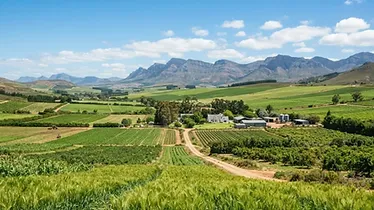
South African farmers receive significantly less government support than their international competitors, according to the OECD’s latest agricultural policy report. Between 2023 and 2025, support averaged just 3.1% of gross farm income in South Africa, compared with 13% across 56 countries surveyed. Meanwhile, global agricultural support exceeded US$950 billion in 2025, with nearly half potentially distorting international trade. AgriSA warned that increasing protectionism is restricting South Africa’s access to international markets. The OECD called for reduced trade-distorting subsidies and greater investment in agricultural research, innovation, infrastructure and sustainability.
Read full story: Farmer’s Weekly
Date published: November 5, 2026
Record maize harvest provides South Africa with buffer against El Niño drought risk
South Africa’s 2025-26 maize harvest has reached a record 17.7 million tonnes, providing a strong supply buffer ahead of a potentially severe El Niño event expected to bring hotter, drier conditions into early 2027. The harvest is 6% higher than the previous season, helping replenish stocks and ease maize prices. Despite the drought risk, farmers are proceeding with planting for 2026-27, with 4.5 million hectares of summer crops planned, 2% below last season. Some are shifting towards more drought-tolerant crops, while the existing maize surplus is expected to support supplies into early 2027.
Read full story: Global Agriculture
Date published: November 4, 2026
African News
African Development Bank invests $60 million to expand agricultural finance and create 8,000 jobs in Tanzania
The African Development Bank Group has approved a $60 million loan to strengthen the Tanzania Agricultural Development Bank’s lending capacity, as part of a $120 million initiative jointly funded with the Tanzanian government. The investment aims to address the country’s estimated $1.5 billion annual agricultural financing gap and support the creation of 8,000 jobs. At least 30% of jobs supported will benefit women and another 30% young people. Funding will also expand climate-smart agricultural lending, including investment in efficient irrigation, renewable energy, improved storage and technologies to reduce crop losses.
Read full story: African Development Bank Group
Date published: November 4, 2026
Global News
Government targets bovine TB eradication in England by 2038 through cattle and badger vaccination
The UK Government has formally adopted a long-term strategy to eradicate bovine TB in England by 2038, following a 20% reduction in new herd breakdowns over the past year. The plan includes developing a cattle vaccine for potential deployment by 2030, expanding mandatory blood testing, vaccinating badgers in priority areas and strengthening wildlife surveillance. 2026 also marks the first year in more than a decade without badger culling as part of disease control efforts. A new industry-government board will be established in 2027 to oversee implementation and progress.
Read full story: Farming Online
Date published: November 5, 2026
Bunge closes Argentine fertiliser plant, putting 250 jobs at risk
US agribusiness company Bunge has permanently closed its ammonia and liquid fertiliser production plant in Campana, Buenos Aires province, after more than 50 years of operation. The closure has resulted in 137 permanent job losses, with a further 113 contractor positions at risk. Reasons cited include ageing equipment, technological limitations, changing market conditions, rising sulphur prices and competition from imported fertilisers, particularly from China. The shutdown could increase Argentina’s reliance on imported sulphur-based liquid fertilisers, raising concerns about domestic supply and costs for farmers.
Read full story: UKr Agro Consult
Date published: November 5, 2026
Pakistani farmers demand higher sugarcane prices and threaten Islamabad protest
Farmers’ organisations in Pakistan have given the government 10 days to set a support price of Rs650 per maund for sugarcane and begin the delayed crushing season, threatening protests in Islamabad if demands are not met. The crushing season should have started on 1 November, but sugar mills have yet to begin operations, leaving growers facing uncertainty over prices and payments. Farmers also called for a wheat support price of Rs4,500 per maund, citing rising input costs, water shortages and concerns over low returns. They warned that these pressures are making agricultural production increasingly difficult.
Read full story: Business Recorder
Date published: November 5, 2026
Thailand strengthens rubber market controls to support farmer incomes amid rising prices
The Thai government has pledged to stabilise rubber prices and support farmers as natural rubber values reach a 10-year high, driven by tight global supplies. Measures include managing production volumes, improving quality standards and preventing unauthorised rubber from entering the market and depressing prices. The Rubber Authority of Thailand will also introduce its Smart CESS system in 2027, using GPS tracking to monitor rubber transport, verify export levies and tackle smuggling. Prices are expected to remain elevated during the fourth quarter, with the government aiming to help farmers secure fairer prices and more stable incomes.
Read full story: Bangkok Post
Date published: November 5, 2026