South African News
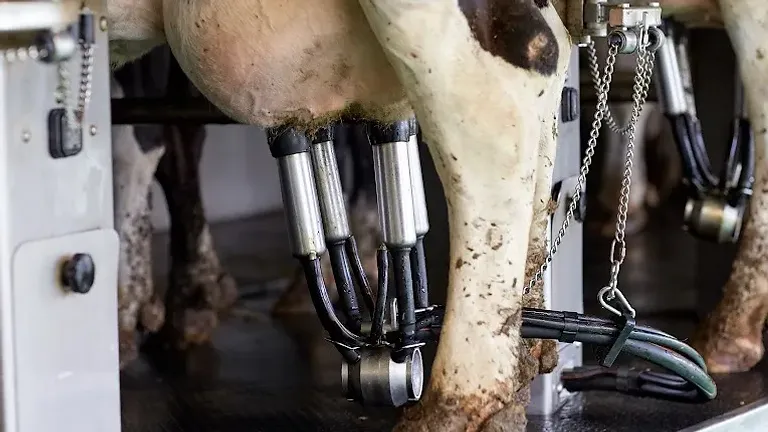
Robotic milking boosts cow welfare and efficiency at South Africa’s second automated dairy
The Human family’s Goedgeleë Farm near Protem in the Western Cape is demonstrating how robotic milking can improve dairy efficiency, animal welfare and sustainability. Its six automated milking units manage more than 360 Jersey cows, allowing them to choose when they are milked while software continuously monitors production, health, fertility and nutrition. Individual precision feeding, reduced human handling and early detection of health problems have improved herd management and milk quality. With only two employees operating the dairy, the family believes automation offers a sustainable way forward for South African dairying, combining technology with good stockmanship.
Read full story: Farmer’s Weekly
Date published: November 9, 2026
New four-year red meat statutory levy cycle begins in South Africa
South Africa’s new four-year red meat statutory levy cycle came into effect on 5 November 2026, with the 2026/27 rates set at R15.80 per head of cattle and R3.08 per head of small stock. Administered by Red Meat Industry Services (RMIS), the levy will fund industry-wide priorities, including disease control, livestock traceability, research, meat safety and skills development. Achievements during the previous cycle included registering more than 15 000 production units on the national traceability platform and establishing a Disease Operations Centre to support the response to foot-and-mouth disease. The new cycle aims to strengthen these initiatives and improve the industry's long-term resilience and competitiveness.
Read full story: The National
Date published: November 9, 2026
African News
Nigeria urged to turn COP31 climate commitments into practical food security measures
Nigeria must use COP31 to secure practical investment in climate-resilient agriculture, as drought, flooding, land degradation and water shortages increasingly threaten crop and livestock production. Priorities include improved irrigation, drought-resistant seeds, flood protection, pasture restoration, veterinary services and better access to climate finance and agricultural technology. The country should also invest in food storage, processing and distribution to reduce post-harvest losses. The proposed Turquoise Nexus Initiative, linking food production, water security and climate action, offers an opportunity to strengthen international cooperation. However, commitments must be backed by funding, transparency and measurable results to improve farmers’ and pastoralists’ livelihoods.
Read full story: Daily Trust
Date published: November 9, 2026
Global News
Brazil confirms three more Newcastle disease outbreaks, bringing total to four
Brazil has confirmed three additional Newcastle disease outbreaks at commercial poultry farms in Santa Catarina, bringing the total to four since 18 October 2026. The cases have triggered import restrictions from 28 markets, although several major trading partners, including China, the EU and the UK, have limited restrictions to the affected state or sanitary control area. Brazil estimates that regionalisation agreements have protected approximately US$954 million in annual trade by allowing exports from unaffected regions to continue. Authorities have implemented culling, disinfection, movement restrictions and intensified surveillance to contain the disease.
Read full story: Food Agribusiness World
Date published: November 9, 2026
Canada approves new epyrifenacil herbicides for four major field crops
Health Canada has approved three pest control products containing epyrifenacil, introducing two new herbicide formulations for weed management in canola, maize, wheat and soya bean production. The Group 14 herbicide offers a different binding mechanism to existing protoporphyrinogen oxidase (PPO) inhibitors and can control certain weed biotypes resistant to other herbicides in this group. One formulation provides broad-spectrum burndown control, while the second combines epyrifenacil with flumioxazin and pyroxasulfone to provide additional residual activity. Both are approved for pre-plant or pre-emergence applications, as well as fallow land and industrial vegetation management.
Read full story: Agro Spectrum
Date published: November 9, 2026
‘Elephant canteens’ help reduce crop losses and human-elephant conflict in China
A government-backed initiative in Pu’er, Yunnan province, is helping farmers coexist with growing populations of wild Asian elephants by establishing designated feeding areas planted with attractive crops such as maize, sugarcane and pineapple. The so-called ‘elephant canteens’ encourage herds away from homes and higher-value farmland, while farmers receive land rental payments and compensation for crop damage. Wildlife insurance, improved elephant monitoring and affordable loans for alternative income-generating activities, particularly coffee production, provide additional support. Although conflicts and financial losses have not disappeared, the approach is making coexistence more manageable while supporting elephant conservation and rural livelihoods.
Read full story: China Daily
Date published: Not specified in the supplied article.
AI offers new opportunities for tropical agriculture and regional cooperation
Artificial intelligence (AI) is creating new opportunities to improve tropical crop production, with applications including early disease detection, precision irrigation, pest monitoring and faster crop breeding. In China, AI is being used to identify sugarcane disease risks and accelerate the development of higher-yielding varieties, while similar technologies are being applied to bananas, cassava and oil palm. China is also expanding agricultural technology partnerships with Southeast Asian countries, including Cambodia, Laos and Thailand. Collaboration on digital farming tools, weather forecasting and early-warning systems could improve regional agricultural productivity, although affordable access, reliable data and local expertise remain important challenges.
Read full story: People’s Daily Online
Date published: November 9, 2026