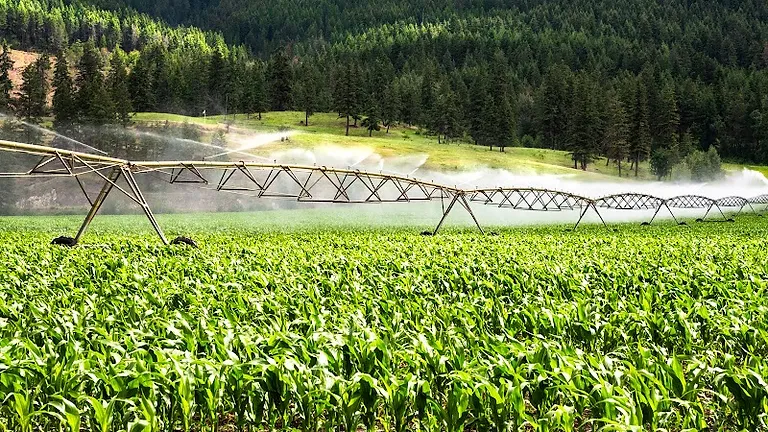
In the realm of modern agriculture, the implementation of advanced irrigation technologies has revolutionized the way crops are cultivated. One such innovation, the centre pivot irrigation system, has become a hallmark of precision agriculture.
This article explores the importance of centre pivot systems, their components, benefits, and their pivotal role in modern farming practices.
Understanding Centre Pivot Irrigation Systems
A center pivot irrigation system, often referred to as a "pivot" or "circle irrigation," is a mechanized irrigation method that automates the process of delivering water to crops. The system consists of a series of towers, pipes, and sprinklers arranged in a circular pattern, with a central pivot point. As the name suggests, the entire system pivots around this central point, hence the term "centre pivot."
Key Components of Centre Pivot Systems
- Central Pivot Point: This is the anchor point from which the entire system radiates. It serves as the rotation axis for the irrigation system.
- Tower Structure: The towers are the supporting structures for the pipes and sprinklers. They are spaced evenly along the circular path and can vary in height to accommodate different crops.
- Pipes and Couplers: Pipes run from the central pivot to the outer edge of the circular field, carrying water to the sprinklers. These pipes are often made of lightweight, corrosion-resistant materials.
- Sprinklers: Sprinklers are mounted on the pipes and distribute water over the crops. They can be designed for specific spray patterns, and their flow rates are adjustable.
- Drive Mechanism: A drive mechanism, usually an electric motor or a hydraulic system, powers the pivot's rotation. This movement enables uniform water distribution over the entire field.
Advantages of Center Pivot Irrigation Systems in Agriculture
- Precise Water Application: Center pivot systems provide controlled and precise water application, reducing waste and ensuring even coverage across the field.
- High Efficiency: These systems optimize water usage, reducing the risk of over-irrigation and water runoff.
- Time Savings: The automation of the irrigation process saves farmers time and labor compared to manual irrigation methods.
- Adaptability: Center pivot systems can be adjusted to suit the specific needs of various crops and field sizes.
- Conservation: The efficient use of water resources contributes to water conservation, a critical consideration in agriculture.
- Improved Crop Health: Uniform irrigation minimizes the risk of both overwatering and underwatering, resulting in healthier crops and higher yields.
Considerations for Implementing Center Pivot Systems
- Field Design: The layout and size of the field should be considered when planning the installation of a centre pivot system.
- Water Source: Access to a reliable and adequate water source is essential for the system's operation.
- Topography: The field's terrain and slope should be suitable for centre pivot irrigation.
- Maintenance: Regular maintenance is crucial to ensure the system's smooth operation and longevity.
In conclusion, centre pivot irrigation systems are at the forefront of precision agriculture, providing a highly efficient and precise means of delivering water to crops. Their adaptability, resource efficiency, and labour-saving capabilities make them integral to modern farming practices. As agriculture continues to evolve, centre pivot systems play a vital role in meeting the demands of sustainable and productive crop cultivation.
For other agricultural products and services, click here