

South African News
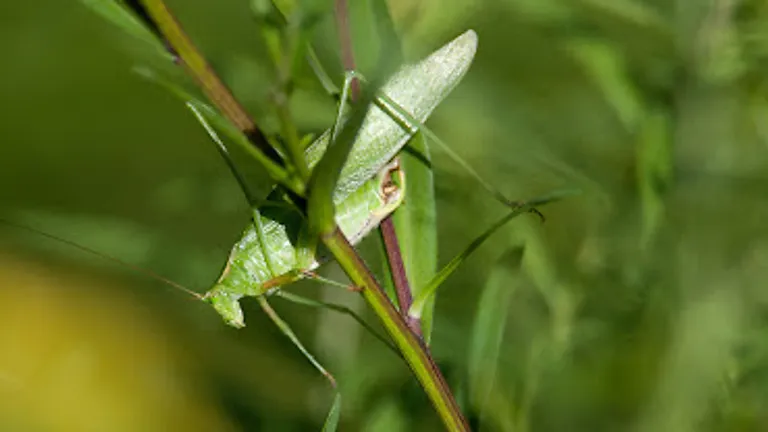
No Cause for Alarm Over Green Longhorn Grasshopper Outbreaks
Recent outbreaks of green longhorn grasshoppers, or katydids, have been reported in various areas of Mpumalanga, including Aerorand and Emalahleni. However, Dr Gerhard Verdoorn from CropLife South Africa reassures farmers that there is no need for concern. The rise in insect populations, including grasshoppers, is attributed to heavy rainfall, but these insects do not harm crops as they primarily feed on grasses. In contrast, cutworms pose a greater threat to crops, particularly cabbage, though farmers have effectively managed this issue. Overall, the grasshopper outbreaks are viewed positively for ecological balance.
Read full story: Farmer's Weekly
Date Published: April 8, 2025
Study Reveals Climate Variability's Impact on Smallholder Maize Producers' Water Use
Research from the University of the Free State highlights the influence of climate variability on water-use behaviour among smallholder maize irrigators in South Africa. The study found that socio-economic factors, such as education and income, significantly affect producers' willingness to adopt sustainable water practices. Positive attitudes towards water conservation and perceived control over farming decisions were crucial for increasing adaptive intentions. With agriculture as the largest user of freshwater, understanding these dynamics is essential for developing effective policies to enhance sustainable water use and mitigate the impacts of climate change on maize production.
Read full story: AgriOrbit
Date Published: April 10, 2025
African News
ZARI’s Sorghum and Millets Breeding Transformation Sets New Benchmark for African Agricultural Research
The Zambia Agricultural Research Institute (ZARI) has undergone a transformative revival of its sorghum and millets breeding programmes, supported by a subgrant from the Bill & Melinda Gates Foundation and facilitated by the Africa Dryland Crops Improvement Network (ADCIN). Formerly constrained by outdated infrastructure, ZARI now boasts upgraded laboratories, irrigation systems, digital tools, and renewable energy solutions. These advancements enable year-round research, precision breeding, and strengthened regional collaboration. By embracing cutting-edge methods and fostering strategic partnerships, ZARI is setting a model for climate-resilient agriculture, with ambitions to establish a Centre of Excellence for Climate-Smart Agriculture.
Read full story: AgroPages
Date Published: April 11, 2025
Global News
Foie Gras Reimagined: Scientists Replicate Taste Without Force-Feeding
A German-Danish research team has developed an ethical alternative to traditional foie gras, eliminating the need for cruel force-feeding of ducks and geese. Led by physicist and amateur chef Thomas Vilgis at the Max Planck Institute for Polymer Research, the team created a pâté using collagen-rich tissue, goose or duck liver, fat, and enzymes that mimic those in the birds’ digestive systems. After five years of research, the result is said to be indistinguishable in taste and texture from conventional foie gras. The innovation offers a humane solution, especially suitable for countries where force-feeding is banned.
Read full story: South China Morning Post
Date Published: April 10, 2025
Harvest Delays and Price Drops Heighten Anxiety for Brazilian Rice Farmers
Prolonged rainfall in Rio Grande do Sul has disrupted Brazil’s rice harvest, causing quality concerns and threatening profitability. According to Emater/RS-Ascar, harvesting was halted twice due to intermittent rain and resumed only from April 4th. With just 68% of the crop harvested, farmers are rushing to drain fields and protect yields as further adverse weather looms. Grain quality has suffered from repeated wetting and drying cycles, while prices have fallen by 2.81% in a week, averaging R$76.52 per 50kg sack. Growers fear continued low prices will impact the sector’s financial viability.
Read full story: Agrolink
Date Published: April 10, 2025
China’s Pea Tariffs Spark Shift Toward Lentil Production Amid Global Trade Uncertainty
Canadian pulse growers are re-evaluating crop plans after China imposed a 100% tariff on Canadian peas, prompting predictions of a sharp decline in pea acreage. Analysts suggest 400,000 to 500,000 acres could shift from peas to lentils, particularly red and small green varieties, despite concerns about oversupply and disease. Meanwhile, India’s 11% lentil tariff has dampened prices, but there is hope it could be reduced or eliminated depending on domestic production in India and Australia. Analysts warn that China is unlikely to ease restrictions soon, with Canadian peas now seeking alternative markets such as India, Bangladesh, and Pakistan.
Read full story: The Western Producer
Date Published: April 10, 2025
Calls for Stricter Border Controls as Foot-and-Mouth Disease Fears Grow
Concerns over foot-and-mouth disease (FMD) have intensified, prompting NFU Cymru to urge the UK government to enhance border security measures. Since September 2022, over 190 tonnes of illegal meat have been seized at the Port of Dover, with recent outbreaks in Germany, Hungary, and Slovakia raising alarms about a potential FMD outbreak in the UK. The union demands a permanent ban on personal meat imports and stronger enforcement to protect livestock. NFU Cymru officials warn that current measures are inadequate and vulnerable to exploitation, highlighting the need for urgent action to safeguard the nation's biosecurity.
Read full story: FarmingUK
Date Published: April 11, 2025










