

South African News
Global Macadamia Shortage Eases Impact of Incoming US Tariffs
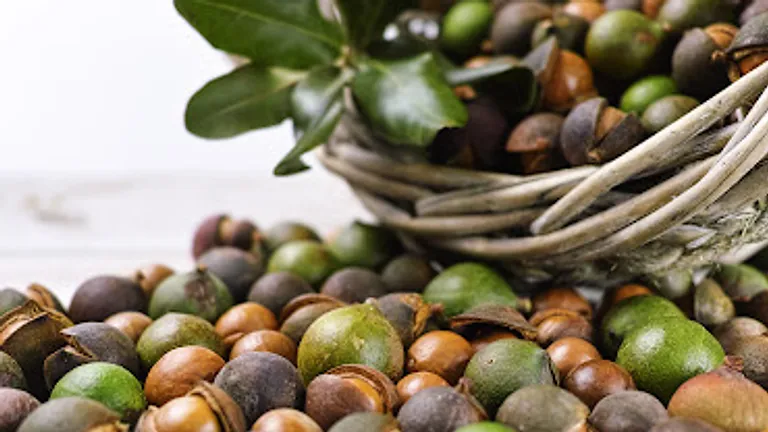
A global shortfall in macadamia yields is expected to cushion the impact of a 30% US import tariff on South African nuts set to begin on 1 August 2025. Poor weather conditions in key growing regions—South Africa and Australia—have drastically reduced crop forecasts. South Africa’s harvest is now projected at 85,166 tonnes, down from 93,433 tonnes, due to regional weather disruptions including hail, drought, and temperature extremes. Australia's crop has also been downgraded due to storms and flooding. Although the US remains an essential market, industry leaders believe the smaller global supply and forward-sold stock will help buffer the short-term effects.
Read full story: Farmer’s Weekly
Date Published: July 16, 2025
Ancient African Food Strategies Offer Blueprint for Climate Resilience
New research by scientists Leanne Phelps and Kristina Douglass reveals that African communities survived 10,000 years of climate change by adopting flexible, mixed livelihood strategies. Drawing on isotopic data from 187 archaeological sites, the study shows that people successfully blended herding, farming, fishing, and foraging, adjusting their methods to fit shifting environmental conditions. These diverse approaches were crucial during times of climatic stress, especially after the African Humid Period. The findings challenge rigid, top-down development models and highlight the need for adaptive, context-specific food systems in the face of modern climate challenges.
Read full story: Food For Mzansi
Date Published: July 16, 2025
African News
Africa and Asia Join Forces to Transform Agrifood Systems Through Innovation and Branding
At a landmark ministerial meeting in Hanoi, agriculture ministers from 17 African and Asian nations explored how innovation and national product branding can reshape agrifood systems. The event highlighted the success of Viet Nam’s “One Commune One Product” (OCOP) initiative, which has boosted local economies by promoting distinctive, culturally rooted products. The FAO’s corresponding “One Country One Priority Product” model aims to transform food systems using similar strategies. Delegates shared successes, such as Malawi’s revival of its banana industry and Egypt’s focus on date palms. The event underscored the value of knowledge-sharing to build climate-resilient, inclusive, and sustainable agriculture.
Read full story: FAO
Date Published: July 15, 2025
Global News
Over 150 English Farms Found Illegally Abstracting Water Amid Drought Concerns
More than 150 farms in England have breached water abstraction regulations since mid-2022, with 199 recorded violations, 141 of which posed environmental risks, according to Environment Agency data obtained by the BBC. Despite the severity, only one prosecution has occurred. Critics, including campaign group Wildfish, argue that lax enforcement has made illegal water use an “acceptable occupational risk.” The National Farmers’ Union backs a “proportionate” and educational approach, while the Environment Agency plans to double inspections to 6,000 annually by 2029. Concerns grow as dry spells increase, threatening sensitive ecosystems like chalk streams and impacting food production.
Read full story: BBC News
Date Published: July 16, 2025
Asia’s Leading Egg Producers Scale Up to Meet Nutritional Demands
Asia’s top egg-producing nations—China, Indonesia, India, Japan, and Pakistan—are advancing poultry systems to meet rising nutritional needs. China leads globally with over 612 billion eggs produced annually, driven by high-tech farms in provinces like Shandong. Indonesia follows with 144 billion eggs, supported by government subsidies and small-scale farms, mostly on Java. India, with 142 billion eggs, relies on commercial layer farms and the National Egg Coordination Committee. Japan prioritises hygiene and freshness, producing up to 40 billion eggs a year, while Pakistan’s 28.82 billion eggs stem from growing demand and gradual adoption of modern farming techniques.
Read full story: aviNews Asia
Date Published: July 16, 2025
Gen Z Farmers Lead China’s High-Tech Agricultural Transformation
China’s Generation Z farmers are redefining agriculture by embracing cutting-edge technologies like drones, AI, and satellite navigation. Young farmers such as Wang Huan and Ding Zehui are swapping manual labour for smart farming tools, significantly boosting efficiency and precision. With over 75% mechanisation and more than 2.2 million machines equipped with Beidou navigation, modern farming is becoming more attractive to youth. Gen Z’s pride in agriculture is also reshaping its social image, with viral videos showcasing high-tech farming gaining traction online. Their enthusiasm is revitalising rural communities and aligning with national goals to modernise agriculture by 2027.
Read full story: China Daily
Date Published: July 17, 2025
New ‘Bracero Program 2.0’ Aims to Reform U.S. Farm Labour Amid Immigration Raids
U.S. Representative Monica De La Cruz has introduced a bill dubbed the Bracero Program 2.0, a modernised version of the controversial mid-20th-century guest worker scheme. The proposal seeks to tackle labour shortages in agriculture by reforming the H-2A visa system, enabling foreign farmworkers to stay up to 12 months and work across multiple employers. The bill includes wage guarantees—minimum wage plus $2/hour—and a cap of 10,000 active “portable” visas. Despite its exploitative historical roots, De La Cruz says the updated scheme prioritises worker protections and economic stability. The move comes as immigration raids escalate across the U.S.
Read full story: MySA
Date Published: July 16, 2025










