

South African News
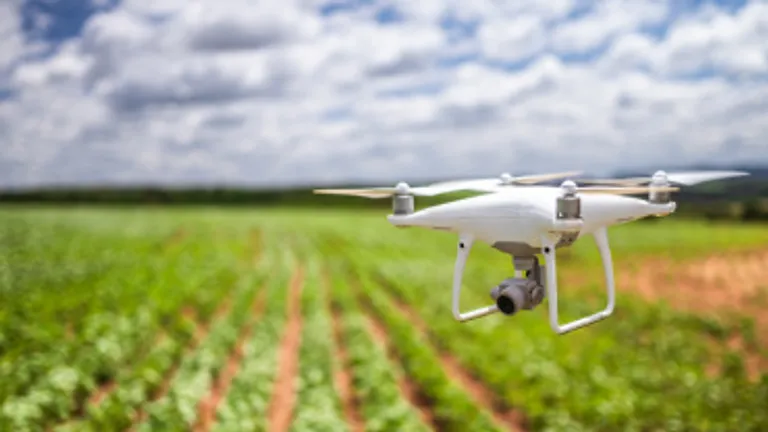
Precision Spraying: Drones Lift Farming to New Heights
Drone technology is rapidly reshaping South African agriculture, offering farmers improved efficiency, reduced costs, and enhanced sustainability. A 2025 Market Intelligence Report by Green Cape and the Western Cape Department of Agriculture highlights drones’ 75% higher fuel efficiency compared to manned aircraft, alongside lower chemical drift and environmental impact. Free State farmer Kyle-Jones Middleton has seen major benefits, including zero crop trampling, reduced contractor costs, and full control over spraying schedules. His success illustrates how precision spraying and imaging are propelling a new era of smarter, self-sufficient farming across South Africa.
Read full story: Food For Mzansi
Date Published: November 7, 2025
Technology Takes Centre Stage in Building Africa’s Sustainable Agriculture Future
A panel hosted by Corteva Agriscience and CNBC Africa in Johannesburg highlighted the pivotal role of technology in driving sustainable agriculture and food security across Africa. Experts including Wandile Sihlobo and Ferdie Meyer stressed that aligning technology, policy, and private-sector investment is vital to transforming Africa into a global agricultural powerhouse. Panellists called for stronger local research capacity, digital innovation, and long-term investment in education and infrastructure. Farmer and entrepreneur Lebohang Dhludhlu underscored the importance of technological access and training for youth and women to build inclusive, resilient agricultural growth.
Read full story: Corteva Press Release
Date Published: November 7, 2025
African News
Tanzanian Government Distributes Sprinklers to Strengthen Irrigation Farming in Geita
Around 200 smallholder farmers in Tanzania’s Geita Region are set to benefit from 20 new sprinkler irrigation systems provided by the Ministry of Agriculture under the National Food Systems Resilience Programme (NFSRP). The initiative, aimed at reducing reliance on rain-fed farming, will support 14 farmer groups in Chato District and six in Geita Municipality. NFSRP Coordinator Timothy Semburuka said the programme promotes climate-resilient agriculture and enables year-round crop production, empowering local communities—especially youth and women—to adapt to changing weather patterns.
Read full story: Daily News Tanzania
Date Published: November 6, 2025
Global News
Greek Rice Farmers Turn Wedding Tradition into Sustainable Business
Greek rice farmers are tackling food waste and financial strain by repurposing broken rice as “wedding rice” for use in traditional ceremonies. The Chalastra cooperative in northern Greece has sold more than three tons since May 2025, offering a sustainable alternative to throwing edible rice at weddings—an act that wastes an estimated 200 metric tons annually. Greece, the EU’s third-largest rice producer, faces droughts and low-cost competition from South Asia. By marketing broken rice, which makes up about 9% of exports, farmers hope to reduce waste while boosting income and awareness.
Read full story: The Business Standard
Date Published: November 6, 2025
Japan Unveils Lettuce-Harvesting Robot for Plant Factories
Japanese robotics firm FingerVision has developed a visual-tactile robot capable of automatically harvesting delicate leafy greens, including lettuce, within plant factories. Created for PLANTX Corporation, the system uses advanced sensors to detect “slippage” and adjust its grip, allowing it to cut and transfer produce gently and efficiently. This breakthrough addresses one of the most complex challenges in agricultural automation—handling fragile crops without damage. With global demand for plant-factory automation rising amid labour shortages, the innovation is expected to significantly boost productivity and consistency in controlled-environment farming.
Read full story: Vertical Farming
Date Published: November 6, 2025
OECD Reports Sharp Decline in Government Support for Canadian Farmers
Government assistance to Canadian farmers has fallen sharply over recent decades, with support now representing only 8.2% of gross farm receipts—down from as high as 35% in the 1980s, according to the OECD. From 2022 to 2024, Canadian producers received an estimated US$5.88 billion annually, mostly through risk-management programmes like income stabilisation and crop insurance. While slightly higher than U.S. support levels, Canada’s figure remains below the OECD average of 13.2%. Analysts say the decline reflects policy shifts away from direct subsidies, even as new funding targets greenhouse gas reduction and climate resilience.
Read full story: HighRiverOnline
Date Published: November 6, 2025
Indonesia to Build New Poultry Farms to Stabilise Chicken and Egg Prices
Indonesia’s Agriculture Minister Andi Amran Sulaiman has unveiled plans to construct new poultry farms in regions where chicken and egg prices exceed government benchmarks. The move responds to soaring demand driven by the government’s free nutritious meal programme, which requires an extra 1.1 million tons of chicken meat and 700,000 tons of eggs annually. The initiative is expected to generate 1.4 million jobs while improving price stability. Egg prices in provinces such as West Sumatra and Yogyakarta remain above the official reference rate amid rising feed and production costs.
Read full story: aviNews Asia
Date Published: November 7, 2025










