

South African News
Seriti empowers smallholder farmers through tech innovation and training
Over 300 smallholder farmers across KwaZulu-Natal, Limpopo, North West, and Mpumalanga have transformed from subsistence growers into thriving agri-entrepreneurs through the Seriti Institute’s partnership with the Citi Foundation Global Innovation Challenge. The two-year initiative, running from 2023 to 2025, provided training, tools, infrastructure, and market access under Seriti’s Multifunctional Agri-Nodes model. Farmers benefited from business management courses, value chain dialogues, and access to Seriti’s Community Fresh App, which connects producers to consumers and retailers. With over 60% of participants being women and youth, the project promotes sustainable, climate-smart farming and strengthens local food systems.
Read full story: Food For Mzansi
Date Published: November 13, 2025
Rising tractor sales signal strong outlook for South Africa’s 2025/26 farming season
South African farmers are showing renewed confidence ahead of the 2025/26 summer crop season, with tractor sales rising nearly 15% year-on-year in September 2025, according to the South African Agricultural Machinery Association. The surge, with 758 units sold, reflects solid financial gains from the 2024/25 season, driven by favourable weather and bumper harvests across field crops, horticulture, and wine grapes. Farmers plan to plant 4.1 million hectares this season - 1% more than last year -underpinned by a positive La Niña rainfall outlook. These strong machinery investments suggest optimism for another productive agricultural year.
Read full story: Farmer’s Weekly
Date Published: November 12, 2025
African News
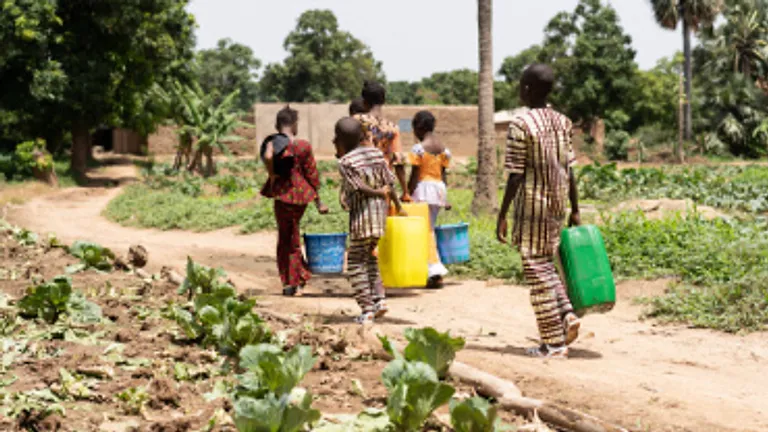
Experts warn widening tech gap threatens Africa’s food security
Agricultural experts have cautioned that Africa’s growing technology divide could worsen food insecurity, hinder investment, and limit smallholder farmers’ ability to adapt to climate change. Speaking at the Agriculture Summit Africa 2025, Arzikin Noma’s Adeshola emphasised that technology is essential for resilience and productivity, citing his company’s success with digital payments during Nigeria’s 2023 cash crisis, which improved farmer repayments and savings. Agritech founder Okugbo Moses highlighted the continent’s “last-mile information gap,” noting that while data exists, most rural farmers lack access to practical training and connectivity. Both experts urged Africa to adopt accessible, locally relevant digital innovations.
Read full story: Punch
Date Published: November 13, 2025
Global News
Global coffee brands join forces to boost climate resilience in Western Honduras
Coffee producers Julius Meinl, the J.M. Smucker Co., and Tchibo have partnered with the Hanns R. Neumann Stiftung (HRNS) to launch a four-year climate resilience project in Western Honduras. Running from 2025 to 2029, the initiative will support 4,000 smallholder families across 6,000 hectares and involve 20 farmer organisations. Drawing on 15 years of experience from the coffee&climate initiative, it will promote soil and water conservation, agroforestry, and erosion control while enhancing farmers’ livelihoods. With technical support from IHCAFE, the project aims to make Western Honduras a regional model for sustainable, biodiversity-positive coffee production.
Read full story: Global Coffee Report
Date Published: November 13, 2025
Danish dairy farmers halt Bovaer use over claims of cattle health problems
A growing number of Danish dairy farmers have stopped using Bovaer, a methane-reducing feed additive made by dsm-firmenich, after reporting severe health issues in their herds, including illness, fertility problems, and even deaths. Since October 2025, Denmark has required farms with over 50 cows to feed Bovaer for at least 80 days per year to cut methane emissions. Farmers like Anders Ring claim cow health improved after discontinuing the additive, while authorities investigate. The Danish government and industry bodies are urging farmers to report problems, as dsm-firmenich insists Bovaer remains safe and no scientific evidence links it to the complaints.
Read full story: The Fence Post
Date Published: November 10, 2025
Japanese-Brazilian farmers’ agroforestry model offers hope for Amazon restoration
A century-old farming method introduced by Japanese immigrants in Tome-Acu, northern Brazil, is drawing global attention for its role in combating deforestation and climate change. Known as agroforestry, the system integrates crops like cacao, acai, and oil palm within a forest ecosystem, allowing year-round harvests while restoring biodiversity and capturing carbon. Around 170 farmers, mostly of Japanese descent, now practise this sustainable approach across 7,000 hectares, supported by Brazil’s government and the Japan International Cooperation Agency. The method, which proved resilient even during Brazil’s worst drought, is now being shared internationally in countries such as Bolivia, Ghana, and India.
Read full story: The Japan Times
Date Published: November 13, 2025
Small farmers turn Jakarta’s idle spaces into thriving urban farms
Jakarta’s small-scale farmers are transforming idle plots beneath toll roads and across the city into productive green spaces, helping boost local food security and urban greenery. Under the Bekasi-Cawang-Kampung Melayu (Becakayu) toll road, farmers like Hasanuddin cultivate crops such as sweet potatoes, papayas, and melons, harvesting up to 50 kilograms per season. Supported by the city administration, these urban farms have produced tonnes of vegetables during harvest festivals across the capital. However, experts warn that limited profits and weak long-term planning could discourage participation unless urban farming becomes more commercially viable and better integrated into Jakarta’s food system.
Read full story: The Jakarta Post/Asia News Network
Date Published: November 13, 2025










