

South African News
Gauteng rolls out 70,000 FMD vaccines as cases climb
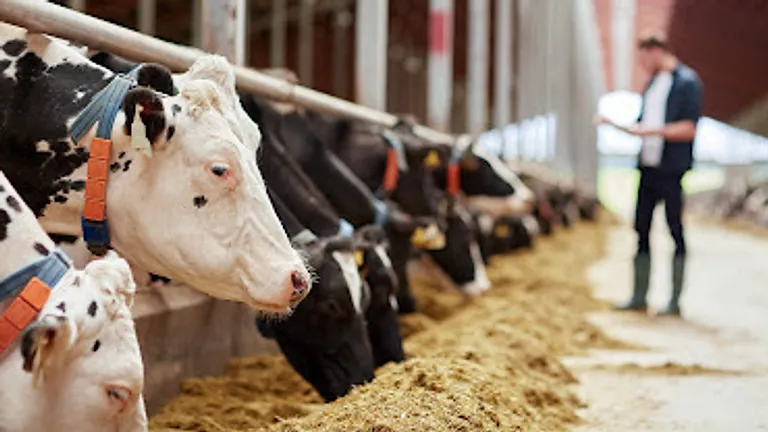
The Gauteng Department of Agriculture and Rural Development has begun administering 70,000 doses of foot-and-mouth disease (FMD) vaccine received from Argentina, marking a shift from targeted to mass vaccination. The province had initially requested 300,000 doses. Vaccinations are under way in Randfontein, Germiston and Tshwane, prioritising high-risk farms near buffalo herds, communal grazing systems and dairy operations close to confirmed cases. Confirmed infections rose from 173 in January to 228 by late February, largely due to improved surveillance. Nearly 300,000 animals have been affected, over 268,000 vaccine doses administered, and more than 128,000 animals culled.
Read full story: African Farming
Date Published: March 2, 2026
Three years on, AAMP shows growth but farmers question delivery
Three years after its launch, South Africa’s Agriculture and Agro-processing Master Plan (AAMP) is showing early production gains, yet concerns remain over implementation and funding. Production volumes have risen, with notable increases in maize, wheat, soya beans and horticultural crops. The plan has improved coordination between government and industry and strengthened dialogue on market access, biosecurity and value-chain development. However, economists and farmers warn that progress is uneven, with red tape, limited access to blended finance and weak provincial alignment hindering impact. Producers argue that clearer timelines, stronger accountability and better risk management are essential if the AAMP is to deliver meaningful change on farms.
Read full story: Food For Mzansi
Date Published: March 2, 2026
African News
Ghana targets $200m palm oil import cut through China partnership
Ghana is seeking to reduce its annual palm oil import bill by $200 million by partnering with Chinese investors under a broader agricultural transformation strategy. Speaking in Accra, Agriculture Minister Eric Opoku said farming is central to President John Dramani Mahama’s economic reset agenda. The Integrated Oil Palm Development Programme (2026–2032) aims to develop 100,000 hectares of plantations and create 250,000 jobs. Government support includes large-scale seed and fertiliser distribution, expanded irrigation and dam construction. By promoting joint ventures rather than aid, and leveraging access to the ECOWAS market, Ghana hopes to boost exports and strengthen agro-industrial growth.
Read full story: Business Insider Africa
Date Published: March 2, 2026
Global News
Climate change could slash farmland values by 60% across much of Europe
New projections from the European Environment Agency warn that climate change could dramatically reshape Europe’s agricultural landscape by 2100, with around 60% of farmland expected to lose value. Rising temperatures, water scarcity, drought and flooding are set to make parts of southern and central Europe less suitable for high-value crops, driving long-term price declines of up to 60% in some regions. Conversely, cooler northern areas such as Sweden, Denmark, Finland, Ireland and the United Kingdom could see farmland values surge as longer growing seasons and milder conditions boost yields.
Read full story: Nottingham VW Camper Hire
Date Published: March 1, 2026
Early harvest points to record olive oil year in Minas Gerais
Olive growers in Brazil’s Minas Gerais are forecasting a record-breaking season after an early harvest driven by favourable winter conditions and strong flowering. Producers expect output to reach 200,000 litres, surpassing the previous 150,000-litre record, following improved yields linked to a moderate La Niña. The state, responsible for about 65% of Brazil’s olive oil production, has seen increasing professionalisation, with earlier harvesting used to enhance quality. Researchers at EPAMIG are supporting expansion through climate monitoring and cultivar development, although heavy summer rains and rising temperatures pose ongoing challenges.
Read full story: Olive Oil Times
Date Published: March 1, 2026
India urged to shift from bulk rice exports to premium, water-efficient varieties
India’s position as the world’s largest rice producer and exporter is under strain due to environmental and financial pressures. Paddy cultivation consumes vast quantities of water, with around 3,000 litres effectively exported for every kilogram of rice shipped abroad. While non-basmati rice dominates volumes, basmati earns far higher returns per kilogram and typically requires less irrigation. Ashok Kumar Singh of the Indian Agricultural Research Institute advocates expanding basmati cultivation within its GI region and promoting premium aromatic varieties. Advances in disease-resistant breeding and predictive genomics are expected to boost sustainability, reduce chemical use and enhance India’s competitiveness in global markets.
Read full story: Rice News Today
Date Published: March 2, 2026
Japan steps up plans to reuse low-level Fukushima soil
Japan’s Ministry of the Environment is moving towards full-scale recycling of soil collected during decontamination work after the 2011 disaster at Fukushima No. 1 nuclear power plant. Around 14 million cubic metres of soil remain in interim storage in Fukushima Prefecture, three-quarters of which is considered low in radioactive material. The government has already used some soil at the Prime Minister’s Office and ministry buildings in Tokyo,and plans wider use in public works. However, strong local opposition and high transport costs pose significant obstacles to expanding the scheme.
Read full story: The Japan Times
Date Published: March 2, 2026










