

South African News
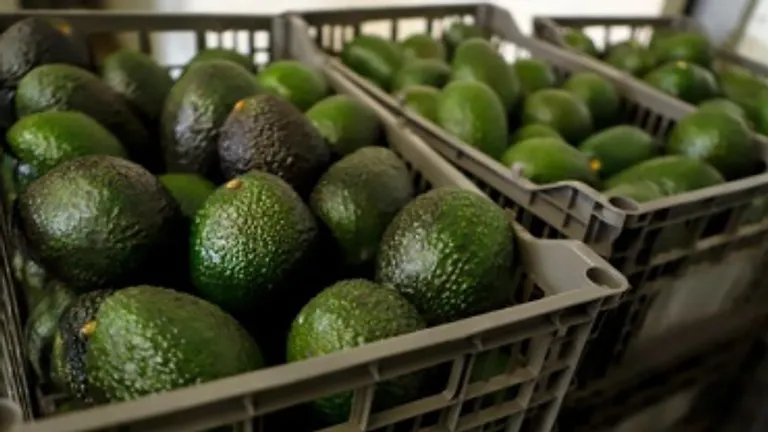
South Africa faces tougher export season despite larger avocado harvest
South Africa’s avocado industry expects a larger crop in 2026, with exports forecast to rise from 19 million to 22 million 4kg cartons as trees enter an “on” production year and younger orchards mature. Favourable early summer weather has also produced larger fruit. However, strong competition from Peru, particularly in Europe during peak supply months, is likely to place pressure on prices. Logistical challenges at the Port of Cape Town add further risk for exporters of the highly perishable fruit. While European consumption continues to grow, South Africa is also exploring expansion into markets such as China, India and potentially South Korea to diversify its export opportunities.
Read full story: Farmer’s Weekly
Date Published: March 9, 2026
Recognising women farmers key to unlocking Africa’s smallholder economy
Africa’s women smallholder farmers should be recognised as entrepreneurs rather than treated as recipients of aid, argues Carl Manlan. Smallholder farms account for about 80% of agricultural holdings in sub-Saharan Africa and produce roughly 70% of the region’s food, forming a sector that contributes around 30% of GDP. With better investment, the African Development Bank estimates the sector could exceed R13.2 trillion ($800 billion) annually by 2030. However, women farmers face barriers including limited land rights, weak infrastructure, post-harvest losses and restricted access to finance. Manlan calls for legal reforms, improved logistics, local procurement policies and tailored financial tools to unlock the economic potential of women-led smallholder enterprises.
Read full story: Daily Maverick
Date Published: March 8, 2026
African News
Insecurity drives 300,000 farmers from Niger State, threatening food production
Worsening insecurity in northern Nigeria has forced at least 300,000 farmers in Niger State to abandon their communities, raising serious concerns about national food production. Persistent attacks by armed groups have led to widespread farmland abandonment and illegal taxation of farmers, undermining agricultural output across the region. Rising input costs, limited access to fertilisers and government food import policies have further strained farmers, with falling prices pushing many out of business. The editorial urges federal and state governments to strengthen security, support farmers with inputs and incentives, and facilitate the return of displaced farmers before the rainy season to prevent further declines in agricultural productivity.
Read full story: Daily Trust
Date Published: March 9, 2026
Global News
Australian farmers stockpile diesel as Middle East conflict disrupts fuel supply
Australian farmers are rushing to stockpile diesel after fuel wholesalers began rationing supplies amid disruptions linked to conflict in the Middle East and the closure of the Strait of Hormuz. With major shipping companies suspending transit through the region, deliveries of diesel to farms have been reduced sharply, leaving some producers receiving only a fraction of their orders. Farmers warn that limited fuel could halt machinery operations, disrupt transport of livestock and crops, and ultimately drive-up food prices. The federal government maintains there is no national fuel shortage and says current constraints are caused by a surge in demand, while discussions with industry continue to manage supply.
Read full story: ABC News
Date Published: March 9, 2026
More young women choosing farming as barriers fall and role models grow
An increasing number of young women are entering agricultural training as attitudes towards women in farming shift and new role models emerge. At Suffolk Rural College, female students now make up nearly 40% of the 2025/26 intake, compared with none in 2004, despite women still representing only 16% of principal farmers nationally. Students say the industry feels more open and inclusive, with social media and figures such as Harriet Cowan from the TV show Clarkson’s Farm helping to inspire newcomers. Colleges are also actively promoting agriculture to girls in schools, highlighting diverse career paths, community values and the appeal of working outdoors.
Read full story: Yahoo News UK
Date Published: March 9, 2026
Sungai Tunoh targeted for modern paddy farming to strengthen Sarawak food security
Sungai Tunoh in Bukit Mabong District has been identified as a promising site for large-scale modern paddy farming to improve food security in Sarawak. According to Stephen Rundi Utom, the state has about 14,000 hectares suitable for modern rice cultivation, with around 2,000 hectares already developed commercially. The 216-hectare Sungai Tunoh area currently relies partly on traditional methods that yield about two tonnes annually, but modern seed varieties and mechanised farming could raise production to as much as 12 tonnes with two harvests a year. Authorities are encouraging farmers to adopt modern technology, treat agriculture as a business and diversify into activities such as fish farming and livestock to increase income.
Read full story: Malay Mail
Date Published: March 9, 2026
Maharashtra’s ₹35,000 crore farm loan waiver raises concerns over credit discipline
The state of Maharashtra has announced a ₹35,000 crore farm loan waiver covering about 30 lakh farmers, including relief for defaulters and incentives for those who have repaid loans on time. While the government says the measure will protect farmers from financial distress, critics warn that repeated waivers can weaken credit discipline and strain public finances. The Reserve Bank of India has long cautioned that such policies, often introduced near elections, are not a lasting solution to agricultural risks and may encourage strategic defaults. Since 1990, governments in India have spent about ₹3 lakh crore on farm loan waivers, with mixed results for farmers’ incomes and agricultural investment.
Read full story: The Indian Express
Date Published: March 9, 2026










