

South African News
Court imposes final 5 May deadline on South Africa’s FMD vaccination scheme
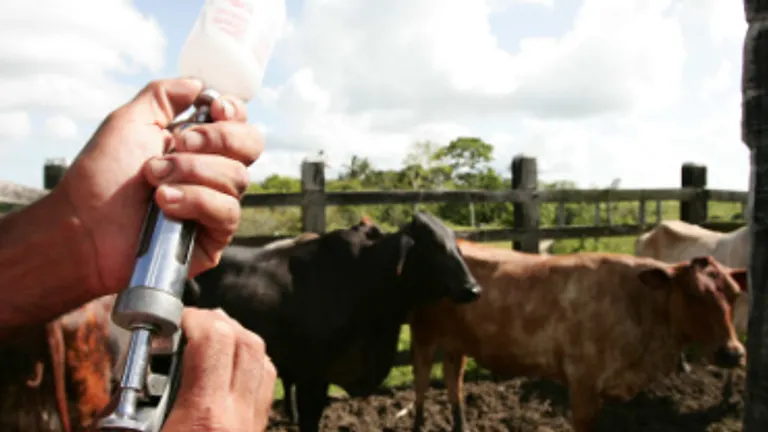
The Pretoria High Court has given South Africa’s Minister of Agriculture, John Steenhuisen, until 5 May 2026 to publish a draft foot-and-mouth disease (FMD) vaccination scheme after criticising delays in responding to an urgent legal challenge from farming organisations. The applicants argue that current regulations already permit private farmers and veterinarians to vaccinate livestock, yet access to vaccines remains blocked in practice, worsening losses as the disease spreads. While the state requested more time, citing drafting difficulties, the court allowed only a short postponement and ordered officials to pay legal costs, signalling its dissatisfaction with the delay. The case will return to court on 11 May.
Read full story: Farmer’s Weekly
Date published: April 29, 2026
Extended fuel levy relief offers temporary support as diesel costs continue to threaten cane growers
SA Canegrowers has welcomed the government’s decision to extend temporary fuel levy relief, but warns that rising diesel prices will still place severe pressure on farmers, particularly small-scale sugarcane growers. Diesel remains a major production cost, accounting for up to 29% of total expenses for some producers, and a further increase of around R7 per litre in May is expected despite the levy reduction. The organisation said the continued rise in oil prices and weakness of the rand are intensifying the strain on already thin margins. It also stressed the need for long-term solutions, including investment in sugarcane-based bioethanol to improve energy security and support rural livelihoods.
Read full story: Creamer’s Media Engineering News
Date published: April 29, 2026
African News
AFAN urges federal committee to prevent farmer–herder clashes and improve security
The All-Farmers Association of Nigeria (AFAN) has called on the Federal Government to establish a national conflict prevention committee to tackle farmer–herder clashes and wider insecurity affecting agricultural production. AFAN president Mohammed Magaji said persistent violence, particularly in the North-West and North-East, is preventing farmers from accessing their land and sharply reducing food output. He stressed that the proposed committee should focus on preventing disputes before they arise, drawing on the example of Gombe State, where a prevention-led approach reduced tensions. Magaji also highlighted the impact of banditry and Boko Haram insurgency, which he said has made farming impossible in many areas.
Read full story: Vanguard
Date published: April 30, 2026
Global News
Nagaland’s ancient Zabo system offers a sustainable model for water-smart farming
A 500-year-old farming method in Kikruma village, Nagaland, is gaining attention as a powerful example of sustainable agriculture. The Zabo system uses a three-tier structure that combines protected forests, rainwater-harvesting ponds and terraced crop fields to conserve water, prevent soil erosion and improve soil fertility. By integrating forestry, livestock and crop production, the system allows water and nutrients to flow naturally through the landscape without reliance on chemical inputs. Maintained collectively by the village community and passed down through generations, Zabo farming demonstrates how indigenous knowledge can provide practical solutions to modern challenges such as climate uncertainty, water scarcity and sustainable food production.
Read full story: The Better India
Date published: April 30, 2026
Sheep farmers help bring rural life and food education into UK classrooms
As lambing season ends, the National Sheep Association (NSA) is encouraging farmers across the UK to engage with schools and help children better understand farming and food production. Through school visits and live virtual sessions, sheep farmers are introducing pupils to animal care, lambing and the wider role farming plays in managing the countryside. These activities aim to strengthen understanding of where food and wool come from, as well as the environmental benefits of grazing and land stewardship. The initiative is also inspiring interest in agricultural careers, with participating schools already reporting increased enthusiasm among pupils for working in farming.
Read full story: Farming Online
Date published: April 30, 2026
Brazil’s 2026/27 coffee harvest forecast to rise 11.5% to record level
Brazil’s 2026/27 coffee crop is expected to increase by 11.5% compared with the previous season, with production forecast to reach a record 71.4 million 60kg bags, according to a farmer survey by the Coffee Trading Academy. Improved weather conditions, particularly beneficial off-season rainfall, and stronger crop management have supported the positive outlook. Arabica output is projected to rise 13.5% to 47.9 million bags, while robusta is expected to increase 7.6% to 23.5 million bags. Higher coffee prices have also enabled growers to maintain adequate fertiliser use, contributing to improved yields and expanded planting areas across Brazil.
Read full story: Reuters
Date published: April 29, 2026
Uncertainty remains over restart of Mexican live cattle imports
The cattle industry is continuing to monitor uncertainty over when live cattle imports from Mexico might resume, with market participants suggesting a reopening is unlikely before autumn or winter. Imports have been suspended for more than a year because of the continued threat of New World screwworm in Mexico, although no cases have been detected in the United States. Industry leaders believe that even if ports reopen, the impact on supply may be limited due to already tight cattle numbers. The USDA is still assessing the situation and considering a phased reopening, while surveillance and prevention efforts remain in place as the pest continues to move north in Mexico.
Read full story: Brownfield
Date published: April 29, 2026










