

South African News
Climate-smart sugarcane drive aims to revive South Africa’s farming sector
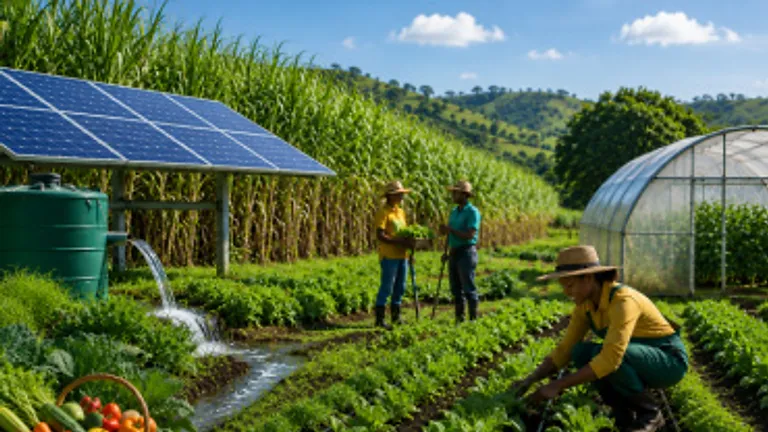
South Africa is stepping up efforts to promote climate-smart sugarcane farming as small-scale growers play a bigger role in advancing sustainable agriculture and supporting a greener economy. A recent workshop in Jozini, KwaZulu-Natal, brought together farmers, UN agencies and industry experts to explore solutions for climate resilience, renewable energy and economic sustainability within the sugar sector. Discussions focused on regenerative farming, green finance and converting sugarcane waste into renewable energy products such as ethanol and electricity. Pilot projects planned for Jozini and Nkomati aim to improve farmer incomes, reduce emissions and strengthen rural energy access amid rising production costs and climate pressures.
Read full story:ChiniMandi
Date published: May 8, 2026
Corrected diesel price hike brings modest relief to South African farmers
South African farmers have received limited relief after the Department of Mineral and Petroleum Resources corrected an error in the May 2026 diesel price calculation, reducing the wholesale diesel increase by nearly R1 per litre. The mistake involved incorrectly recording a temporary diesel levy reduction, which had initially inflated the fuel hike. Despite the adjustment, diesel prices remain above R30 per litre, continuing to place pressure on farmers already struggling with rising input costs, transport expenses and weak profit margins. Higher fuel prices are also expected to affect the wider agricultural supply chain, including fertiliser distribution, harvesting, logistics and food transport costs.
Read full story:Farmer’s Weekly
Date published: May 7, 2026
African News
Nigerian farmers accuse banks of misusing agricultural funds
Concerns over agricultural financing in Nigeria intensified after farming leaders accused banks of diverting funds intended for farmers into the real estate sector. Speaking at the 2026 Agriculture and Agro-Allied Summit in Lagos, agricultural entrepreneur Prince Wale Oyekoya claimed poor financial commitment and weak implementation were worsening the sector’s funding crisis. Bank representatives defended lending practices, arguing that smallholder farmers often face difficulties accessing loans due to fragmented operations and market risks. Industry experts also warned that insecurity, climate shocks and limited rural opportunities are deepening food insecurity, while stressing that greater investment, youth empowerment and improved access to finance are essential for long-term agricultural growth and national stability.
Read full story:Vanguard Nigeria
Date published: May 8, 2026
Global News
Gene-edited barley becomes first UK crop approved under new breeding rules
A gene-edited barley developed by Rothamsted Research has become the first crop to receive approval under the UK’s new precision breeding regulations, marking a major milestone for agricultural innovation. The barley has been edited to increase lipid content, creating a higher energy forage crop for livestock such as cattle and sheep. Researchers believe the crop could improve feed efficiency, boost animal productivity and help reduce methane emissions. The approval follows an independent scientific assessment confirming the crop meets regulatory standards. The barley will now undergo wider trials through the PROBITY initiative to assess its performance under real farming conditions.
Read full story:NFU Online
Date published: May 7, 2026
Flood damage sparks livestock feed shortages in Bangladesh’s Sylhet region
Severe flooding in Bangladesh’s Sylhet region has created a major cattle feed crisis after vast areas of boro paddy fields and fodder sources were submerged. Farmers in the haor areas, where livestock farming is a key source of income, are struggling with sharply rising feed costs and declining profitability. Hay prices have more than doubled in recent months, while the costs of granular feed and oil cake have also surged due to supply shortages and higher transport expenses. Many farmers fear they may be forced to abandon cattle farming as maintaining livestock becomes increasingly unaffordable. Local authorities are encouraging grass cultivation and monitoring the impact of the disaster on the region’s livestock sector.
Read full story:Asia News Network
Date published: May 8, 2026
Ancient rice-fish farming method shown to boost yields and cut pests
An international study led by East China University of Science and Technology has confirmed that the traditional rice-fish co-culture farming system can significantly improve rice production while reducing pests and diseases. Researchers found that rice yields increased by an average of 12.5 per cent compared with conventional rice monoculture systems. The presence of fish also boosted populations of natural pest predators, while reducing pests, diseases and weeds. Scientists said the method offers a scalable and environmentally sustainable solution to global challenges such as food security, biodiversity loss and pesticide reduction. The findings were supported by global data analysis and a four-year field experiment.
Read full story:China Daily
Date published: May 8, 2026
Farm suicides in India remain alarmingly high despite slight decline
India recorded 10,546 suicides among people involved in the farming sector in 2024, a slight decrease from the previous year, according to data released by the National Crime Records Bureau. Despite the decline, the figures still equate to roughly one farm-related suicide every hour. More than half of those who died were agricultural labourers, highlighting growing distress among workers dependent on farming wages rather than crop ownership. Maharashtra recorded the highest number of cases, followed by Karnataka, where suicides rose sharply compared with 2023. The report also pointed to increasing pressures from extreme weather events, financial hardship and declining rural livelihoods across several farming regions.
Read full story:Down To Earth
Date published: May 7, 2026










