

South African News
AI Set to Revolutionise South Africa’s Fruit Export Industry
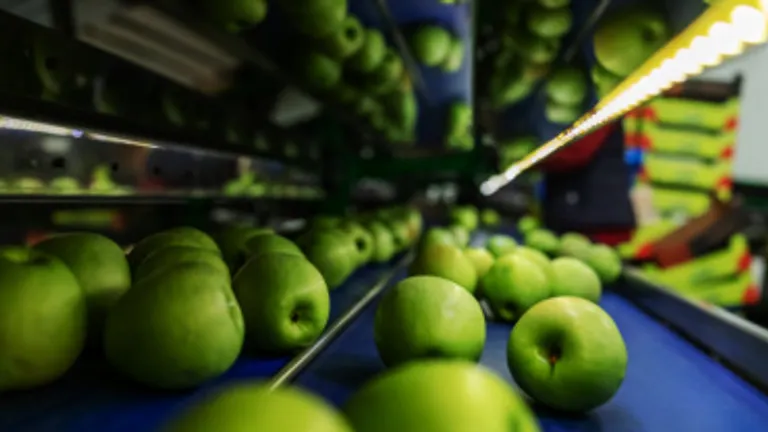
South Africa’s fruit export sector could gain a significant competitive edge through the adoption of artificial intelligence, according to Jaco Ferreira. AI has the potential to improve forecasting, crop planning, market intelligence and logistics by analysing data from weather patterns, satellite imagery, export markets and supply chains. Growers could make more informed decisions on irrigation, labour and fertiliser use, while exporters could better anticipate market demand and shipping challenges. AI-powered quality control and conversational data tools may also enhance efficiency, reduce waste and simplify decision-making. Ferreira argues that combining agricultural expertise with intelligent technology will strengthen South Africa’s position in global export markets.
Read full story: IOL
Date Published: June 23, 2026
Market Access Key to Unlocking Smallholder Farmers’ Profits
South Africa’s smallholder farmers are increasing production, but many continue to struggle financially because they lack access to profitable markets. Agricultural economist Glen Mendi argues that extension services should expand beyond teaching farming techniques to include market access, pricing, value chains and business planning. While farmers may know how to grow crops efficiently, they often face low prices, unreliable buyers and limited market information. Mendi highlights the importance of agricultural economists in helping farmers make commercially viable decisions and identifies indigenous crops such as sorghum and millet as opportunities for growth. He stresses that stronger links between production and markets are essential for sustainable rural development.
Read full story: Food for Mzansi
Date Published: June 23, 2026
African News
Kenya’s Turmeric Expansion Plan Aims to Reach 800,000 Farmers
A major agro-industrial initiative in Kenya is set to expand turmeric farming by integrating more than 800,000 farmers into a contract farming and value-addition programme. Led by Turmeric Kenya, the project aims to create new income opportunities by linking smallholders to processing, certification and export markets. Farmers from tea-growing, sugarcane and mixed-crop regions will be encouraged to cultivate turmeric as a high-value crop with a relatively short growing cycle. The initiative also includes the production of turmeric-based nutraceuticals, animal health products and organic farming solutions. By developing local processing capacity and certification systems, the programme seeks to boost farmer earnings and strengthen Kenya’s position in global wellness and export markets.
Read full story: Farmer’s Review Africa
Date Published: June 23, 2026
Global News
Healthy Amazon Forest Vital for South America’s Agriculture
The Amazon rainforest plays a crucial role in sustaining rainfall across South America, supporting agriculture, hydropower and water supply far beyond its borders. Research highlighted in the article shows that deforestation weakens the forest’s ability to recycle moisture, increasing the risk of ecosystem instability at lower levels of global warming. Recent droughts, fire damage and El Niño conditions have further reduced the forest’s resilience and slowed recovery. Studies also suggest that Amazon deforestation is already reducing rainfall in major farming regions, affecting crop yields. The article argues that protecting intact forests, restoring degraded areas and reducing fire risks are essential for climate resilience, food security and economic stability across the continent.
Read full story: Mongabay
Date Published: June 22, 2026
HBiofuels Seen as Key to Future Demand for Crop Agriculture
A new U.S. study warns that crop agriculture is facing a future where supply growth outpaces demand growth, raising concerns about farm profitability. Slowing population growth, declining fertility rates and near-saturated meat consumption are expected to limit demand for crops, while advances in biotechnology, artificial intelligence and data analytics continue to boost agricultural productivity. Researchers argue that increased biofuel production could provide a vital new market for crops such as corn and soybeans, helping to absorb rising output and support farm incomes. Without stronger biofuel demand, the study suggests millions of acres of U.S. corn production could disappear by 2050 as farmers struggle to find profitable markets.
Read full story: Canadian Cattlemen
Date Published: June 23, 2026
Malaysia Assures Fertiliser Supply Despite Rising Global Prices
Malaysia has sufficient fertiliser supplies to meet national demand until the end of 2026, despite global price pressures linked to conflict in the Middle East. Deputy Agriculture and Food Security Minister Datuk Chan Foong Hin told parliament that current stocks can cover around nine months of demand, although some farmers have reported significant price increases. The government is prioritising fertiliser supplies for padi production to safeguard food security while developing a national fertiliser buffer stock as a long-term measure. Authorities are also drafting a Fertiliser Bill to regulate quality and distribution, while promoting organic and biofertilisers to reduce reliance on imports and support sustainable local production.
Read full story: Asia News Network
Date Published: June 23, 2026
Australia Retains Paraquat Use Despite Ongoing Parkinson’s Concerns
Australia has decided to continue allowing the use of the herbicide paraquat, despite it being banned in more than 70 countries over concerns about links to Parkinson’s disease. The Australian Pesticides and Veterinary Medicines Authority concluded that a review of scientific evidence did not establish a direct causal relationship between paraquat exposure and the disease. However, stricter controls will be introduced, including lower application rates, the phased removal of backpack sprayers and stronger safety requirements for users. Parkinson’s advocacy groups, researchers and some politicians have criticised the decision, arguing that growing scientific evidence supports a connection between paraquat exposure and increased Parkinson’s risk. Farming groups, meanwhile, maintain that the herbicide remains an important tool for weed management and conservation agriculture.
Read full story: The Guardian
Date Published: June 23, 2026










