

South African News
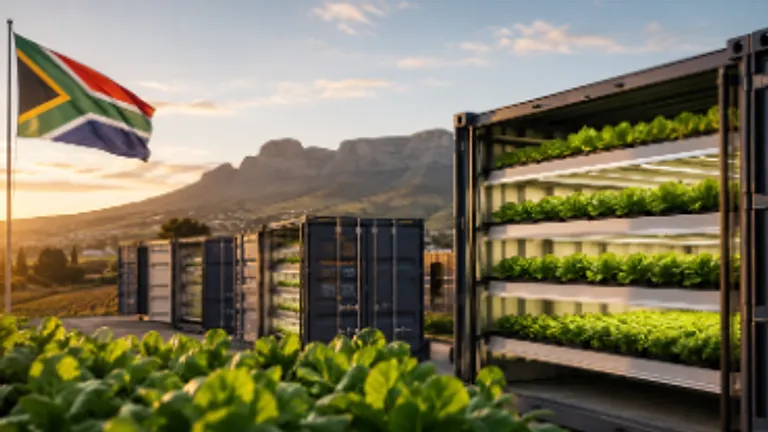
Arable Grow Brings Container Farming to SPAR Shelves
Arable Grow, a Western Cape Agri-tech start-up, is using hydroponics, renewable energy and climate-controlled shipping containers to produce fresh crops year-round in urban areas. Its modular farms use around 95% less water than conventional agriculture, avoid pesticides and reduce transport distances and food waste. Produce is grown according to demand, while surplus is dehydrated into nutrient-rich powder. SPAR’s Supplier Development Programme helped the company achieve Good Agricultural Practice certification and enter formal retail. Arable Grow now supplies SPAR stores in the Western Cape and aims to expand modular container farms across South Africa to support food security and more resilient local supply chains.
Read full story: Supermarket and Retailer
Date published: August 31, 2026
Grain SA Urges Affordable Crop Insurance Amid Swartland Drought
Severe rainfall shortages in the Swartland are threatening the 2026 wheat crop, with some farmers forecasting yield losses of 25% to 30%. Grain SA says rising input costs, weak margins and increasing climate risks have left dryland producers with little financial resilience. The organisation warned that South Africa’s wheat production is already at a 97-year low and called for government support to make multi-peril and yield-based crop insurance more affordable. It also proposed index-based insurance, improved use of climate data, continued research investment and a responsive wheat tariff to help protect domestic production and food security.
Read full story: Farmer’s Weekly
Date published: August 31, 2026
African News
Fairtrade Africa Urges Action to Raise Cocoa Farmers’ Incomes
Fairtrade Africa has called for greater collaboration across the cocoa industry to help farmers achieve a living income amid low market prices and rising production costs. The organisation’s new Living Income Reference Price for cocoa is GH¢45.40/kg in Ghana, a 10% increase, and 1,758 CFA francs/kg in Côte d’Ivoire, up 47%. Fairtrade Africa said stronger partnerships and investment are needed to improve productivity, quality and resilience to plant disease and rising input costs. Its West Africa Cocoa Programme has reached more than 48,000 beneficiaries, with the proportion earning a living income increasing from 28% to 48%.
Read full story: Ghana Business News
Date published: September 1, 2026
Global News
Strengthening El Niño Raises Agricultural Risks Across the Americas
El Niño is strengthening across the Pacific, increasing risks to agriculture, livestock, water supplies, commodity markets and trade across the US and Latin America. NOAA estimates a greater than 90% chance of a very strong event in autumn and winter 2026–27, with a 69% chance of historic strength in October–December. Potential impacts vary by region, with Central America and the Caribbean particularly exposed to drought, while South American producers face differing rainfall risks. Warmer global temperatures could further intensify heat-related pressures. Farmers and agribusinesses are being urged to use climate forecasts, soil-moisture monitoring, crop insurance and other tools to prepare.
Read full story: AgroLatam
Date published: August 31, 2026
US-Canada Trade Dispute Threatens Higher Farm Machinery Costs
The breakdown in US-Canada trade negotiations is expected to increase costs for American farmers as Canada prepares roughly $20 billion in retaliatory tariffs on targeted US goods, including agricultural machinery and components. The measures, due to take effect on September 8, cover combines and headers, hay and mowing equipment, livestock transporters and agricultural trailers. Highly integrated cross-border supply chains mean machinery manufacturers could face repeated tariffs as components cross the border, while steel tariffs add further pressure. With farm incomes already under strain, equipment industry groups have urged both governments to remove tariffs and restore trade certainty.
Read full story: Farm Progress
Date published: August 31, 2026
Guangdong Farmers Adapt as Increasing Typhoon Risks Threaten Crops
Farmers in China’s Guangdong province are adapting to increasingly severe typhoons and unpredictable weather that can destroy crops, depress prices and cause lasting damage to farms. Longan growers in Maoming, the world’s largest longan-producing area, face particular risks because harvests coincide with the typhoon season. Farmers are using livestreaming to sell produce quickly before storms arrive, while others are harvesting early and reinforcing or dismantling greenhouse structures. However, extreme heat, prolonged rainfall and soil problems are creating additional challenges. Despite the risks, farmers remain in the region because its climate provides valuable opportunities for year-round and winter production.
Read full story: Channel News Asia
Date published: August 31, 2026
Severe Frost Damages New Zealand Avocado Orchards
A major frost event on 5 and 6 August has caused significant damage to avocado orchards across New Zealand’s Northland and Bay of Plenty, with temperatures falling as low as -4°C. Some growers have reported losing up to half their crop, while others have lost entire crops and trees. The frost has also damaged flowers, potentially affecting next season’s production. Despite the losses, NZ Avocados remains confident that export markets can be supplied, with strong demand expected from Australia and Asia. The sector is forecasting 2.8 million trays for Australia and up to 5 million for Asian markets.
Read full story: Farmers Weekly
Date published: September 1, 2026










