

South African News
Managing Currency Risk Across the Agricultural Production Cycle
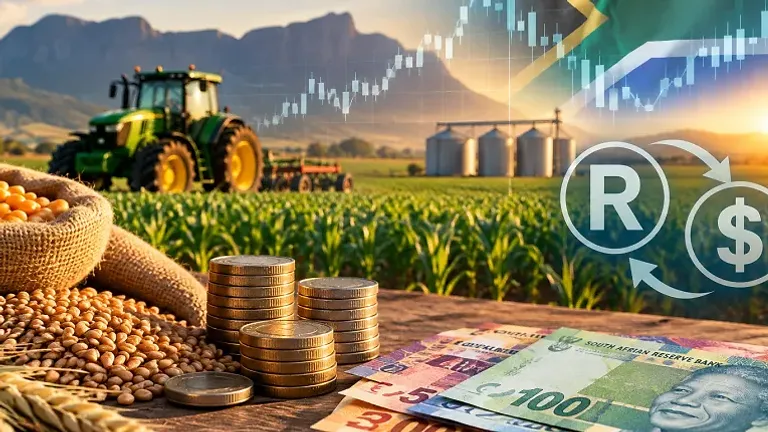
South African agriculture’s growing international trade exposure is increasing farmers’ sensitivity to foreign exchange movements. With agricultural exports reaching R266.3 billion in 2025, Citadel Global advises producers to manage currency risk from input purchases through to export payments. Fertiliser, seed, fuel and equipment may be paid for before harvest, while export receipts remain uncertain. A portfolio approach using spot transactions, forward contracts, options and foreign currency account hedging can balance certainty and flexibility. Citadel Global also recommends measuring outcomes against budgeted exchange rates and adopting formal FX policies to protect margins and cash flow.
Read full story: Citadel Global
Date Published: September 16, 2026
Farmers Need Shared Financial and Technical Support for Regenerative Agriculture
Farmers should not be expected to bear the financial risks of transitioning to regenerative agriculture alone, according to speakers at a Nedbank-hosted panel at Nampo Cape. The shift can involve upfront investment, a learning curve and temporary yield declines, making farm-specific planning and support from financiers, retailers and technical partners essential. Panellists recommended starting small, measuring outcomes and adapting practices to local conditions. Carbon credits could help cover 10% to 20% of transition costs during the first three years, although returns take time. Stable market access and collaboration were also highlighted as important incentives.
Read full story: Farmers Weekly
Date Published: September 16, 2026
African News
Nigeria’s Agricultural Gender Gap Costs Over N3 Trillion a Year
Nigeria’s agricultural gender gap is costing the country an estimated $2.3 billion (N3.1 trillion) annually, equivalent to about 2% of GDP, according to the FAO. Speaking at an event marking the 2026 International Year of the Woman Farmer, UN agencies highlighted barriers facing women in access to land, finance, technology, markets and leadership. The WFP has supported 128,000 women in northern Nigeria over the past five years, while IFAD programmes have reached at least 96,827 women. The agencies called for greater investment in women’s productive capacity, enterprises and organisations to strengthen food security and rural economies.
Read full story: Daily Trust
Date Published: September 17, 2026
Global News
CRISPR Licence Opens Door to Gene-Edited Crops for India’s Smallholders
A new licence secured by ICRISAT gives its researchers access to CRISPR-Cas9 technology, enabling the development of climate-resilient and higher-yielding crops for smallholder farmers in Asia and Africa. The work will target pulses, millets, oilseeds, chickpea, pigeon-pea and groundnut. Scientists caution that complex traits such as drought tolerance are difficult to engineer and that edited varieties must undergo field trials and regulatory approval. Gene-edited seeds could potentially be saved and replanted, supporting India’s farmer seed rights. However, affordable seed multiplication, farmer awareness and effective delivery systems will be essential for adoption.
Read full story: Nature
Date Published: September 17, 2026
War And Extreme Weather Threaten Asia’s Food Security and Food Prices
Disruptions to fuel and fertiliser supplies caused by the war in Iran, combined with El Niño-linked weather extremes, are increasing food security risks across Asia, according to Verisk Maplecroft. Indonesia’s palm oil harvests have been affected by wildfires, India’s monsoon rains are 15% below normal, and Thailand’s sugar harvest is expected to decline. The consultancy warned that reduced crop production and rising food inflation could increase the risk of civil unrest and political instability in vulnerable economies, including India, Indonesia and the Philippines. Conflict-affected Afghanistan and Myanmar face particularly severe humanitarian risks.
Read full story: Business Standard
Date Published: September 17, 2026
Farmers Urged to Strengthen Biosecurity as Salmonella Cases Rise
Beef + Lamb New Zealand is urging sheep and beef farmers to strengthen on-farm biosecurity following an increase in reported cases of Salmonella Brandenburg in cattle in Taranaki. The disease can cause abortions and deaths in sheep and cattle during late pregnancy, with unvaccinated and previously unexposed animals particularly vulnerable. Stress from poor weather, feed shortages, yarding, shearing and high stocking densities can increase bacterial shedding. Farmers are advised to monitor livestock closely for abortions or unexplained deaths, use disposable gloves when handling dead animals and seek veterinary advice if salmonella is suspected.
Read full story: Beef + Lamb New Zealand
Date Published: September 16, 2026
USDA Sets Out Biofuels Trade Plan After Record US Ethanol Exports
The US Department of Agriculture has released its American Biofuels Trade Outlook following record ethanol exports in 2025. US farmers shipped 2.2 billion gallons of ethanol worldwide, worth $4.7 billion, marking the strongest year for US ethanol exports on record. The new plan aims to remove restrictions on American biofuels, expand ethanol blending internationally and create additional market opportunities for US farmers. USDA officials said the export performance demonstrates the strength of the country’s biofuels sector and outlined the trade outlook as a strategy for maintaining and expanding international demand for US-produced ethanol.
Read full story: US Department of Agriculture
Date Published: September 16, 2026










