

South African News
Building a Resilient Farm: Preparing for Heavy Rain and Flooding
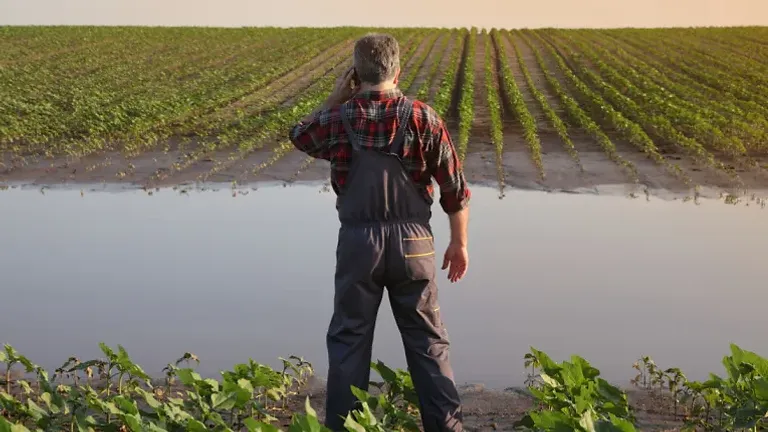
As part of our Building a Resilient Farm series, this first instalment looks at preparing South African farms for heavy rain and flooding. Farmers can reduce the impacts of extreme wet weather by protecting soils with cover crops, minimising compaction and using buffer strips to slow runoff and nutrient losses. Crop drainage can help prevent waterlogging, while rotational grazing, appropriate stocking rates, supplementary feeding and shelter can protect livestock. Maintaining drainage systems, roads, housing and other infrastructure is also important. After flooding, farmers should check livestock, assess soil and water quality, avoid driving on saturated land and record damage to improve future preparedness.
Read full story: Farm.co.za
Date published: September 18, 2026
US-South Africa Rift Deepens Over Land, Crime and Race-Based Policies
The US-South Africa relationship has deteriorated over disagreements about land reform, crime and Black economic empowerment policies. The Trump administration has imposed visa restrictions on South African officials, accusing Pretoria of discrimination against the white minority. A major dispute centres on South Africa’s 2025 Expropriation Act, which permits property to be acquired in the public interest and allows zero compensation only in limited circumstances; no expropriations have yet taken place under the law. Washington has also raised concerns about rural crime and B-BBEE requirements, which promote black participation in the economy. Pretoria disputes US characterisations of its policies and says they address the legacy of apartheid.
Read full story: IOL
Date published: September 20, 2026
African News
Tanzania Launches National Agroforestry Platform
Tanzania has launched the Tanzania Agroforestry Stakeholder Platform (TASP) to improve coordination, knowledge sharing and investment across the agroforestry sector. The platform brings together government institutions, NGOs, farmers, private-sector organisations, extension officers and financial institutions to identify shared priorities and coordinate action. Stakeholders highlighted agroforestry’s role in improving soil fertility and water conservation, increasing agricultural and livestock productivity and strengthening resilience to climate change. The platform will also aim to ensure research findings and innovations reach farmers and policymakers more effectively, supporting the expansion of sustainable agroforestry practices in line with Tanzania’s long-term development and climate strategies.
Read full story: IPP Media
Date published: September 21, 2026
Global News
India’s Haryana Organic Farmers Call for Government Testing Laboratories
Organic and natural farmers in Haryana are seeking government-run testing laboratories to help certify chemical-free produce and improve access to markets. Newer farmers often struggle to sell their produce at good prices because of limited marketing networks, knowledge and affordable testing facilities. Agriculture experts have proposed laboratories modelled on the state’s existing soil and water-testing facilities, offering free or low-cost certification to reassure consumers and support farmers. Haryana’s government is also implementing a scheme to promote natural farming through farmer education, financial assistance and support with certification, marketing and branding. Some farmers are additionally forming cooperatives to market their produce collectively.
Read full story: The Tribune India
Date published: September 21, 2026
Japan Seeks US$43 Million To Combat Cherry Tree-Devouring Beetle
Japan’s Environment Ministry is seeking 6.7 billion yen (US$43 million) to combat the invasive red-necked longhorn beetle, which is damaging cherry, plum and peach trees. The proposed funding is 11 times the initial budget for 2026 and would support eradication efforts and measures to protect trees. The beetle, first detected in Japan in 2012, was designated an invasive alien species in 2018. Its larvae burrow into trees and feed on the wood for up to three years. Authorities warn that further spread could damage agriculture, increase falling-tree risks, affect ecosystems and threaten the country’s famous cherry blossom viewing.
Read full story: South China Morning Post
Date published: September 21, 2026
China’s Agricultural Drones Carry Out 30 Times More Work Than Those in the US
China’s agricultural drone sector operates at a vastly greater scale than that of the US, despite the two countries having similar areas of cultivated land. China had around 309,000 plant-protection drones at the start of 2026, which carried out approximately 203 million hectare-treatments in 2025, compared with an estimated 6.64 million hectare-treatments in the US. The difference reflects more than access to drone technology, with China having developed an established industry encompassing operators, contractors, regulation and agricultural practices. US use is growing rapidly, while drones are also finding applications where conventional machinery is less practical, including wet fields, tall crops and smaller or irregular fields.
Read full story: CleanTechnica
Date published: September 21, 2026
Paraguay Beef Shipments to US Rise 46%
Paraguayan beef shipments to the US reached 30,000 tonnes between January and July 2026, a 46% increase on the same period a year earlier, according to the USDA’s Foreign Agricultural Service. Most exports were frozen lean beef used in ground beef production. Paraguay is expected to become the US’s third-largest beef market by volume in 2027, while exporters could benefit from a temporary tariff-free quota for lean beef trimmings. They estimate Paraguay could supply 5,000–10,000 tonnes under the quota, although Brazil is expected to take most of the available volume. Paraguay’s beef exports are forecast to increase further in 2027.
Read full story: RFD-TV
Date published: September 20, 2026










