

South African News
Potato Supply Pushes Prices Down While Onion Market Holds Firm
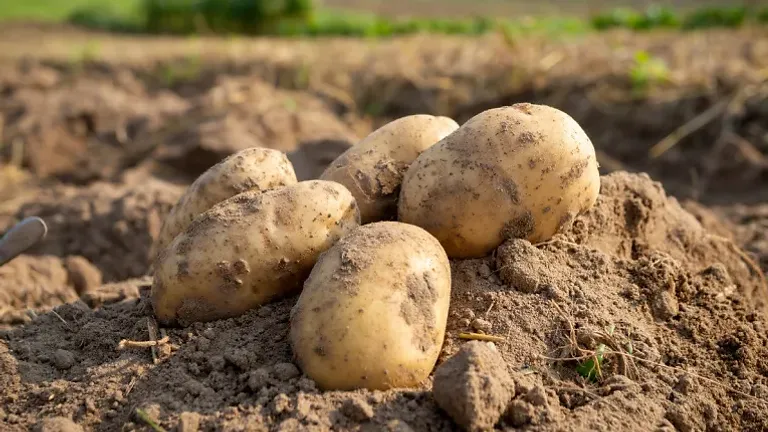
Higher supply produced contrasting results in South Africa’s potato and onion markets during the first half of 2026. Potato volumes rose 8% to 66.55 million 10kg bags, pushing average prices down 19% as oversupply, poorer quality and an excess of large potatoes put pressure on returns. Onion volumes increased 10% to 24.61 million bags, but prices still rose 8% to R72.34 per 10kg bag, indicating that supply was better matched with demand. The contrasting outcomes highlight the importance of managing quality, sizing, delivery timing and stock levels, rather than simply increasing production, to protect growers’ returns.
Read full story: Farmer’s Weekly
Date published: September 25, 2026
Private Sector to Help Scale Up South Africa’s FMD Vaccine Production
South Africa will allow qualifying private companies to use Agricultural Research Council (ARC) intellectual property to manufacture its foot and mouth disease (FMD) vaccine under conditional licensing agreements. The move aims to increase vaccine availability during the current outbreak while the ARC rebuilds its own manufacturing capacity. The vaccine is designed for domestic FMD strains and requires annual administration. Licensing income will be ringfenced to support the ARC’s future production capacity. Meanwhile, virus samples from circulating South African strains will be sent to the UK’s Pirbright Institute in October for further vaccine matching to assess the effectiveness of available local and imported vaccines.
Read full story: The Common Sense
Date published: September 24, 2026
African News
Nigeria Begins Agricultural Law Review to Strengthen Food Security
Nigeria’s Federal Government has begun the second phase of a review of agricultural laws, aiming to replace outdated legislation with a framework that supports food security, agribusiness and investment. The first phase identified obsolete provisions, overlapping responsibilities and regulatory gaps, including those affecting climate change, mechanisation, agricultural technology and private-sector investment. The government is also seeking investment in fisheries, with inadequate processing, storage, cold-chain infrastructure, modern fishing technology and market access identified as major constraints. Officials said investment in these areas could improve productivity, reduce losses and strengthen the livelihoods of local fish producers.
Read full story: The Guardian Nigeria
Date published: September 25, 2026
Global News
€10m EU Project To Strengthen Agricultural Advisory Networks Across Europe
A new €10 million, seven-year EU-funded project aims to strengthen agricultural advisory services and improve knowledge-sharing across Europe. Coordinated by Teagasc, dynADVICE brings together 21 organisations from 16 countries, including advisory services, research bodies and innovation specialists. The project will develop advisers’ skills through training, mentoring, peer learning and cross-country exchanges, while digital tools will support collaboration and knowledge-sharing. A €3.9 million cascade-funding programme will provide grants through seven open calls, with the first expected in early 2027. The project aims to improve links between advisers, farmers, researchers, policymakers and innovators, helping farmers access practical and timely advice.
Read full story: Agriland
Date published: September 24, 2026
Thailand Plans Larger Rice and Palm Oil Reserves Ahead Of El Niño
Thailand’s Department of Internal Trade has proposed increasing strategic rice reserves by 30% and crude palm oil reserves by 20% to strengthen food security and prepare for potential El Niño-related drought. The department said Thailand is unlikely to face shortages because it is a major producer and current stocks are considered sufficient, although global demand for food reserves is supporting prices. Cassava and maize will require closer monitoring because Thailand relies partly on imports. Authorities are also working with manufacturers, wholesalers and retailers to monitor supplies and prices of essential goods and maintain production during potential drought conditions.
Read full story: Asia News Network
Date published: September 25, 2026
US Farmers Seek Stronger Chinese Commitments on Agricultural Imports
US farm groups are urging China to increase purchases of American agricultural products and remove retaliatory tariffs as US President Donald Trump and Chinese President Xi Jinping discuss trade. Analysts expect China to reaffirm previous crop-buying commitments rather than agree new deals. China is on track to meet a commitment to purchase 25 million tonnes of US soybeans annually, but is lagging on a broader pledge covering $17 billion of US grains, meat and other agricultural products. Private Chinese soybean crushers remain reluctant to buy US supplies while tariffs make them less competitive than Brazilian soybeans, increasing pressure on Washington to secure improved market access.
Read full story: Reuters
Date published: September 24, 2026
US And Argentine Farmers Have Sharply Different Views of AI Benefits
US farmers are considerably more sceptical of artificial intelligence and data-driven agricultural tools than their Argentine counterparts, according to recent producer surveys. Some 52% of US farmers reported no meaningful benefit from AI, compared with 21% in Argentina. Argentine farmers were also more likely to associate AI with increased production and reduced risk, while around 14% in both countries identified reduced labour as a key benefit. In the US, usability was a concern, with 85% saying data-driven recommendations would sometimes or often be difficult to follow. The findings highlight the importance of practical, understandable and trustworthy technology for wider adoption.
Read full story: Farm Progress
Date published: September 25, 2026










