

South African News
South Africa Exceeds 90% Cattle Vaccination Target as FMD Control Efforts Continue
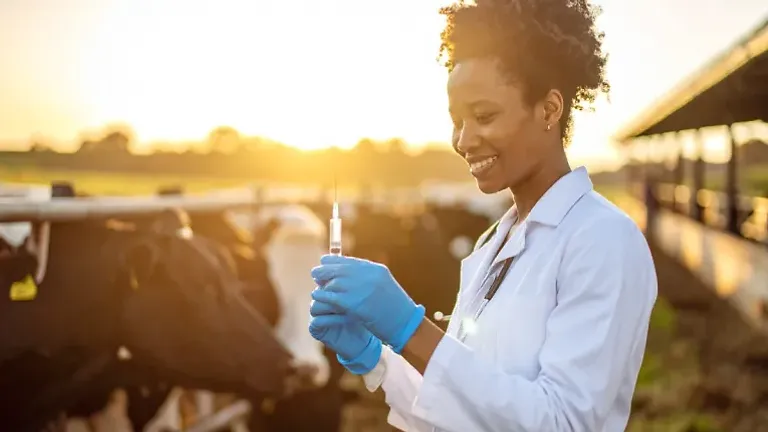
South Africa has vaccinated more than 90% of its cattle against foot-and-mouth disease (FMD), exceeding the government’s December 2026 target of 80%. More than 22 million vaccine doses have been purchased and distributed, with the private sector accounting for approximately four million cattle vaccinated and the state for just under 11 million. All provinces have started booster programmes to maintain immunity, while new outbreaks have reportedly declined significantly. However, vaccination alone will not eliminate the disease, and authorities are urging farmers to maintain strict biosecurity, surveillance and disease reporting measures as the campaign continues.Read full story: 2OceansVibe
Date published: November 13, 2026
Fodder Radish Planting Timing Could Help South African Livestock Farmers Prepare for Super El Niño
With a potentially severe El Niño expected to bring drought, heatwaves and declining grazing availability to South Africa, research suggests that carefully timing fodder crop planting could help livestock farmers maintain feed supplies. A study conducted in KwaZulu-Natal found that December-planted fodder radish produced the highest tuber yields, while January planting delivered the leafiest material and protein. Earlier planting also increased mineral concentrations in the leaves. The findings highlight how farmers can make better use of available rainfall without irrigation or fertiliser, although further trials are needed to establish suitable planting windows across different regions and climatic conditions.
Read full story: The Conversation
Date published: November 15, 2026
African News
Nigeria’s Cassava Industry in Crisis as Starch Imports Surge 13,293% in Five Years
Nigeria’s cassava processing industry is struggling as imports of cassava starch increased by 13,293% between 2020 and 2025, reaching 3,227.7 tonnes. Despite being the world’s largest cassava producer, local processing factories are operating at around 15% of capacity, while farmers face falling prices, mounting debts and unsold produce. High production and transport costs, reduced farm acreage and import tariffs favouring cheaper foreign starch have weakened domestic demand. Industry stakeholders warn that further increases in imports are likely in 2026, threatening local processing businesses and future cassava production.
Read full story: Vanguard
Date published: Not specified in the supplied article.
Global News
England Introduces Nationwide Bird Flu Prevention Zone and Mandatory Poultry Housing Order
Poultry keepers across England must follow enhanced biosecurity measures following the introduction of a nationwide avian influenza prevention zone on 11 November. A mandatory housing order, effective from 13 November, requires all poultry and captive birds to be housed where keepers have 50 or more birds, or sell or give away eggs, poultry products or live birds. The measures come amid increasing confirmed cases of bird flu, raising concerns for the poultry industry ahead of Christmas. The NFU has urged all bird keepers, including small-scale producers, to remain vigilant, improve hygiene and monitor birds for signs of disease.
Read full story: Dunmow Broadcast
Date published: November 16, 2026
Brazil’s Reliance on Imported Fertilisers Raises Concerns for Global Food Security
Brazil imports approximately 88% of its fertiliser requirements, leaving its agricultural sector vulnerable to geopolitical tensions, trade restrictions and energy market disruptions. The country imports 96% of its potassium, 95% of its nitrogen and 72% of its phosphorus, with Russia and China among its largest suppliers. Rising input costs could affect production decisions, profitability and exports of key commodities, particularly soybeans and maize. Brazil is seeking to reduce its dependence through domestic production incentives and its National Fertiliser Plan, which aims to cut import reliance to 45% by 2050. However, achieving this will require substantial investment in infrastructure and production capacity.
Read full story: AgroLatam
Date published: November 15, 2026
Political Divisions in US Senate Raise Uncertainty Over Farm Bill and Agricultural Funding
US President Donald Trump is facing growing resistance from Republican senators over judicial appointments, highlighting divisions within the party ahead of Democrats taking control of the Senate in January 2027. The political shift could complicate negotiations over the 2026 Farm Bill, which remains unresolved despite separate proposals advancing through the House and Senate. Key areas of uncertainty include farm safety-net programmes, crop insurance, conservation and rural development. USDA funding for 2027 is also awaiting congressional approval, while concerns remain over the future direction of US agricultural trade policy, particularly relations with China.
Read full story: AgroLatam
Date published: November 15, 2026
Indonesia Faces Pressure to Reconcile Economic Growth with Climate Commitments
Indonesia has reaffirmed its commitment to pursuing economic growth alongside climate action, pledging to expand solar power capacity by 100 GW and achieve net-zero emissions by 2060 or earlier. However, analysts warn that renewable energy expansion alone will not deliver the transition without reducing coal consumption, tackling forest fires and accelerating industrial decarbonisation. Coal remains the country's cheapest electricity source, while ongoing wildfires in forest and peatland areas threaten emissions targets. Indonesia is also calling for greater international climate finance, as funding for developing countries has fallen sharply, complicating efforts to move away from fossil fuels.
Read full story: Asia News Network
Date published: November 16, 2026










