South African News
Meat Naturally Africa Prepares R3m Drought Plan Despite Improved El Niño Outlook
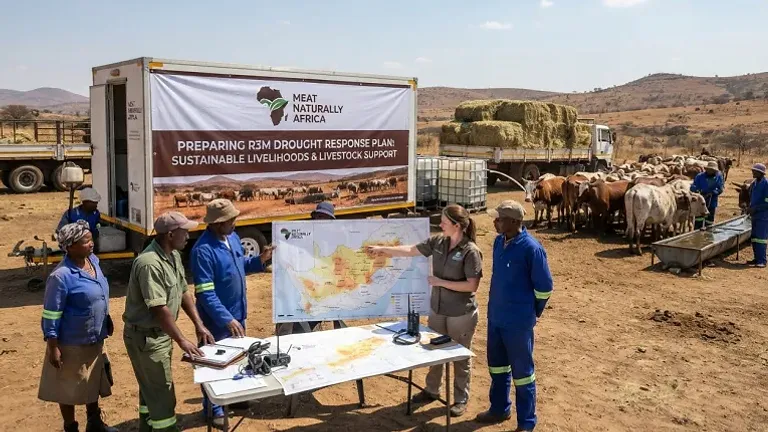
Meat Naturally Africa (MNA) is maintaining its rangeland restoration and farmer training programmes while preparing a R3 million drought response plan for communal livestock farmers in KwaZulu-Natal and the Eastern Cape. Although recent rainfall has improved grazing, soil moisture and dam levels, the organisation remains cautious about the 2026/27 El Niño season. Its four-part strategy includes establishing community livestock hubs with auction and veterinary services, incentivising early cattle sales to reduce grazing pressure, converting invasive wattle into livestock feed, and processing waste wool into erosion-control products. The initiatives aim to protect livestock, support rural livelihoods and strengthen long-term rangeland resilience.
Read full story: Meat Naturally Africa
Date published: November 19, 2026
South African Farmers Face Uncertain Festive Season Market
South African farmers face a mixed market outlook this December, with constrained consumer spending, import competition and challenging weather conditions expected to influence demand, supply and prices. While coastal fresh produce markets typically experience increased festive season demand for summer fruit, inland markets tend to slow as consumers travel. Extreme weather associated with El Niño could also affect produce quality and producer returns. Pork consumption is expected to rise during year-end celebrations, but increased imports and competitive global prices are putting pressure on local producers. Consumers are likely to favour more affordable products and cuts despite seasonal demand.
Read full story: Farmer’s Weekly
Date published: November 18, 2026
African News
Locally Adapted Farming Practices More Important Than Donor Aid for Food Security
Research in eastern Zambia has found that locally adapted farming practices have a greater influence on household food security and resilience than the origin of international donor funding. A study comparing Norwegian-supported conservation agriculture with Chinese-backed commercial farming approaches found that conservation agriculture delivered better food security outcomes, while low crop diversity increased farmers’ vulnerability. Food insecurity remained a structural challenge, particularly for women-headed households. The researchers concluded that sustainable agricultural development requires greater emphasis on locally adapted, ecologically diverse farming systems, including mixed farming, alongside interventions that address gender inequalities.
Read full story: Agribusiness Zambia
Date published: November 18, 2026
Global News
Nutrifresh Plans 150 Acres Of Climate-Controlled Farms In South India
Indian agriculture company Nutrifresh plans to invest Rs 200–225 crore in developing 150 acres of climate-controlled farms across Bengaluru, Hyderabad and Chennai by March 2028. The company will contribute up to Rs 75 crore, with the remainder funded by farmer partners. It currently operates 25 acres in Bengaluru and expects to expand into Hyderabad, adding another 25 acres by March 2027. Further expansion will follow during 2027/28. Investment will support centralised nurseries and post-harvest facilities for sorting, grading and packaging. The controlled-environment systems aim to reduce weather-related production risks and ensure consistent year-round yields.
Read full story: Vertical Farm Daily
Date published: November 18, 2026
Scottish Agronomist to Share Independent Crop Research Expertise In New Zealand
Adam Christie, managing director of Scottish Agronomy, will share Scotland’s experience of independent crop trials and variety testing at CROPS 2026, New Zealand’s largest grower and industry event, organised by the Foundation for Arable Research. His presentation will cover independent trials, AHDB Recommended Lists and cultivar evaluation to help farmers select varieties amid changing climate conditions and crop protection restrictions. During a two-week visit to Canterbury and Southland, he will also explore New Zealand’s farming systems, which have operated without agricultural subsidies since the mid-1980s. The visit aims to encourage knowledge-sharing and identify common challenges facing cereal growers.
Read full story: The Scottish Farmer
Date published: November 19, 2026
EU Delays Decision on Brazilian Poultry Imports, Raising Export Market Concerns
The European Union’s decision to postpone a vote on resuming Brazilian poultry imports until early December has raised concerns about export opportunities and potential price pressures. Brazil’s Ministry of Agriculture maintains that the country has met EU technical requirements, with European auditors confirming that its controls comply with antimicrobial use regulations. However, the delay has frustrated industry representatives and exporters, who warn that restricted access to export markets could make it harder to place surplus production. Additional chicken breast volumes could be redirected to Middle Eastern markets, increasing supply and putting further downward pressure on prices.
Read full story: S&P Global
Date published: November 18, 2026
Trump Announces Thailand Trade Deal Aiming to Double US Agricultural Exports
US President Donald Trump has announced a trade agreement with Thailand that he claims will double US agricultural exports to the country to $2.6 billion. Thailand imported $1.34 billion in US agricultural products in 2025, including grain, feed, horticultural products, oilseeds and livestock products. The proposed deal includes removing tariffs and reducing non-tariff barriers, although the Thai government clarified that negotiations remain ongoing and the agreement is not yet finalised. Plans to provide tariff-free access for up to 99% of US goods are also still under discussion, with some import quotas proposed to protect domestic producers.
Read full story: DTN
Date published: November 18, 2026