South African News
Precision Agriculture Gives SA Farmers an Edge in a Changing World
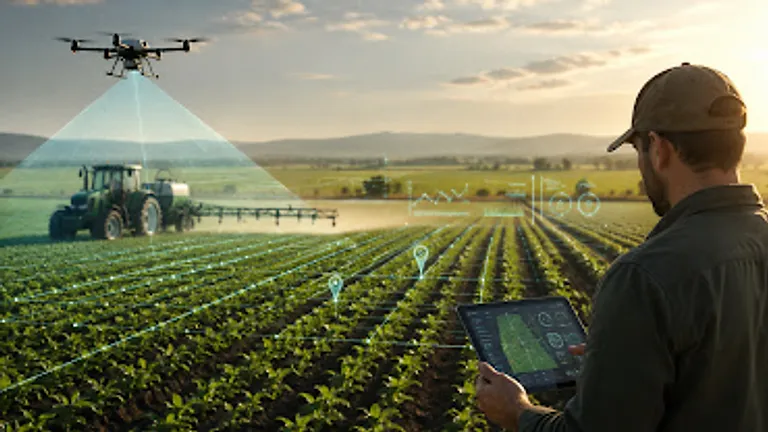
Precision agriculture is becoming increasingly important for South African farmers facing pressure from climate change, global trade, geopolitics and tight profit margins. The approach uses data from soil, crops and environmental conditions, combined with technologies such as GPS, GIS, satellites, drones and sensors, to support more targeted decisions. By tailoring practices such as irrigation, fertiliser application and pest management to specific areas of fields, farmers can improve yields, increase efficiency and reduce waste and input costs. However, adopting these technologies can require significant upfront investment. Financial institutions such as Nedbank Agriculture can support farmers through tailored financing while using technology to reduce lending risks and strengthen the sector's long-term sustainability.
Read full story: Moneyweb
Date Published: August 27, 2026
African Swine Fever Outbreak Raises Concerns Among Pig Farmers In South Africa’s Eastern Cape
Small-scale pig farmers in Ugie, Eastern Cape, are concerned about a suspected African swine fever (ASF) outbreak after large numbers of pigs died. Reported symptoms include weight loss, loss of appetite and unusual behaviour before death, prompting some farmers to slaughter animals before they show signs of illness. The suspected outbreak threatens rural households that rely on pig farming for income and livelihoods. Provincial authorities have deployed veterinary officials and animal health technicians to investigate. Samples will be collected and submitted for laboratory testing, with ASF suspected because of its rapid spread and high mortality rate among affected pigs.
Read full story: 3tres3
Date Published: August 26, 2026
African News
Kenyan Farmers Use Insect-Based Fertilisers to Restore Degraded Soils
Kenyan farmers are turning to worms and insects to produce organic fertilisers and tackle soil degradation linked to intensive farming and chemical fertiliser use. George Muturi Kamau uses redworms to convert food and crop waste mixed with cow dung into nutrient-rich vermicompost, which he says has improved soil quality, water retention and crop yields. Other farmers are using black soldier fly larvae to process market waste into frass, while the mature larvae can be used as animal feed. The approaches could reduce reliance on synthetic fertilisers, improve soil health and address food waste, although producing enough organic fertiliser at scale remains a challenge.
Read full story: Africanews
Date Published: August 27, 2026
Global News
Record Heatwaves Help Deliver Bumper UK Berry Harvest
UK berry growers are expecting a bumper harvest despite a summer of record heatwaves, drought and water shortages. With two-thirds of the crop picked, volumes are 6% higher than in 2025, with particularly strong yields of blackberries, blueberries and raspberries. Investment in secure water supplies, reservoirs and computer-controlled drip irrigation has helped growers protect crops from extreme conditions. However, late-season strawberry production could suffer as plants become exhausted, while blackcurrant yields are forecast to fall by 10%. Around 40% of berry growers still lack reservoirs or licensed boreholes, highlighting the need for further investment and government support to improve water security.
Read full story: The Guardian
Date Published: August 27, 2026
Chinese Greenhouses Use Industrial Waste Heat and Captured CO2 To Grow Strawberries
A modern agricultural park in Liaocheng, Shandong, is using waste heat and captured carbon dioxide from nearby industrial facilities to grow strawberries and cherries. The resources are piped into greenhouses to regulate growing conditions, reduce energy costs and extend production beyond traditional growing seasons. The 133-hectare park also uses intelligent systems to manage environmental conditions, irrigation, fertiliser and lighting. Xinfa Group is developing a circular farming model in which rabbit waste is used as fertiliser, nutrients recovered from fish farming support irrigation, and plant waste is fermented into fertiliser. Vertical farming and multi-storey livestock facilities further improve land-use efficiency.
Read full story: China Daily
Date Published: August 27, 2026
Japan Government to Buy Back Stockpiled Rice Amid Price Collapse Concerns
Japan’s agriculture ministry plans to buy back rice released from government stockpiles in 2025, as growing supplies raise concerns about a collapse in prices for farmers. The government released 590,000 tonnes of stockpiled rice last year to address shortages, but increased production and newly harvested rice have since created a surplus. Private-sector inventories reached a record 2.43 million tonnes at the end of June, while 2026 production is forecast to exceed demand. The buyback is expected in September after the government assesses the new harvest. Supermarket rice prices have fallen to around ¥3,000 per 5kg, down from more than ¥4,000 during the 2024 shortages.
Read full story: Japan Today
Date Published: August 27, 2026
Farm Labour Shortage Pushes Brazilian Growers Towards Mechanisation
Labour shortages are driving Brazilian farmers to accelerate mechanisation and automation, with 44.5% of growers identifying worker shortages as their main concern and 94.8% reporting difficulties recruiting staff. The shortage has delayed farm operations, increased production costs and led many producers to postpone expansion plans. In response, 42.6% have brought forward mechanisation or automation investments, while others are shifting towards less labour-intensive activities. Rising wages, rural-to-urban migration and workers moving into other sectors are contributing to the problem. Despite labour constraints, agricultural labour productivity in Brazil rose 218% between 1997 and 2024, substantially above the global increase of 125%.
Read full story: Fresh Plaza
Date Published: August 26, 2026