
.png)
.png)

14 July '26 - Today in Farming
14 Jul 2026
South African News
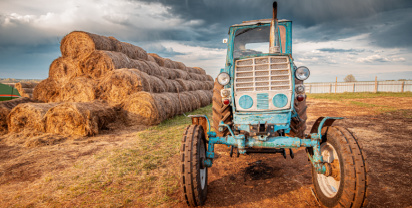
Farmers increasingly rely on second-hand machinery as new equipment sales decline
South African farmers are increasingly purchasing second-hand machinery as high equipment prices, rising input costs and economic uncertainty make new equipment unaffordable. Tractor sales fell by almost 15% in May 2026 compared with the same month last year, while combine harvester sales also declined. Farmers say unpredictable returns, climate change, animal disease, interest rates and delayed harvests have made investing in new machinery too risky. Many are extending the lifespan of older equipment, paying cash for used machinery or seeking family support to fund purchases. Some are also hiring out their tractors to neighbouring farmers to help recover ownership costs.
Read full story: Food For Mzansi
Date published: July 13, 2026
South African farmers welcome court ruling allowing private access to FMD vaccines
South Africa’s farming sector has welcomed a landmark High Court ruling allowing livestock owners and private organisations to independently obtain and administer Foot-and-Mouth Disease (FMD) vaccines. The decision ends the government’s exclusive control over FMD vaccine procurement and distribution, with the court finding there was no valid legal or scientific justification for preventing private sector involvement. Farmers believe the ruling will strengthen efforts to control outbreaks by improving access to vaccines, reducing delays and enabling faster responses to disease threats affecting the livestock industry.
Read full story: Channel Africa
Date published: July 13, 2026
African News
Gaza Province aims to reduce South African vegetable imports through increased production
Mozambique’s Minister of Agriculture, Roberto Albino, says Gaza Province has the potential to produce enough vegetables to replace imports from neighbouring South Africa, with a focus on potatoes, tomatoes, cabbage and onions. During a visit to Massingir Valley Farms, he praised the recovery of production following severe flood damage and called for stronger infrastructure to withstand future flooding. Albino also highlighted the success of seed distribution to affected farmers, the region’s potential to become a maize and bean seed production hub, and the government’s commitment to restoring irrigation systems ahead of the 2026/27 agricultural season.
Read full story: Club of Mozambique
Date published: July 13, 2026
Global News
China and Pakistan launch joint laboratory to boost smart agriculture research
Chinese and Pakistani universities have launched the Belt and Road Joint Laboratory for Biological Resources and Green Smart Agriculture in Arid Regions to strengthen cooperation in agricultural research and innovation. Based in China’s Shaanxi Province, the laboratory will focus on crop breeding, precision farming, artificial intelligence, smart livestock production and sustainable agriculture for arid regions. Researchers have already collected more than 120 crop germplasm samples and developed stress-resistant crop varieties suited to South and Central Asia. The initiative also includes technology transfer, researcher training and student exchanges to improve agricultural productivity and build scientific expertise across Belt and Road partner countries.
Read full story: The Nation
Date published: July 13, 2026
‘Super’ El Niño could drive global food prices higher until 2028
Economists are warning that a potential “super” El Niño weather event could trigger a sharp rise in global food prices lasting into 2028 by disrupting crop production and supply chains. Forecasts suggest the phenomenon could bring severe droughts, floods and extreme weather, affect key agricultural regions and reducing harvests of crops such as wheat, rice, sugar, coffee, cocoa and palm oil. Combined with inflationary pressures linked to the Iran war, analysts believe the event could significantly increase food commodity prices, raise consumer food costs and prolong high interest rates, with lower-income countries expected to face the greatest challenges.
Read full story: The Guardian
Date published: July 12, 2026
Carbon storage boom sparks concern in rural US communities
A growing number of carbon capture and storage (CCS) projects across the United States are facing opposition from rural communities despite strong government incentives designed to reduce carbon emissions. Residents in towns such as Clymers, Indiana, fear potential risks including groundwater contamination, carbon leaks and earthquakes, while questioning whether the projects primarily benefit oil and energy companies through lucrative tax credits. Supporters argue the technology is safe and can help tackle climate change by storing industrial carbon dioxide underground. However, critics believe investment should instead focus on renewable energy and warn that widespread CCS expansion could delay the transition away from fossil fuels.
Read full story: The Guardian
Date published: July 12, 2026
Japan prepares for ‘super’ El Niño as farmers adapt to extreme heat
Japan is preparing for the possible arrival of a “super” El Niño, with experts warning that extreme summer heat could damage crops, particularly rice, and affect fisheries. Although El Niño is usually linked to cooler Japanese summers, forecasters expect above-average temperatures across much of the country due to unusual weather patterns this year. Farmers are increasingly planting heat-tolerant rice varieties following crop damage, shortages and price increases caused by the 2023–2024 El Niño. Scientists say the changing climate is increasing the need for adaptation measures while also highlighting the importance of reducing carbon emissions to limit future impacts.
Read full story: Japan Today
Date published: July 13, 2026
Share this article 

More News
South African News Mass Migrant Exodus Leaves South African Farms and Factories Short of…
South African News Agricultural Science Key to South Africa’s Food Security and GrowthSouth…
South African News Sugar Industry Faces Labour Crisis as Foreign Cane Cutters Flee Violence…
South African News Free State FMD Outbreak Grows as Vaccine Shortages Hamper Control…
South African News South African Agriculture Better Prepared as El Niño Threat LoomsSouth…
South African NewsRooibos seeds to travel to the International Space Station for pioneering South…