
South African News
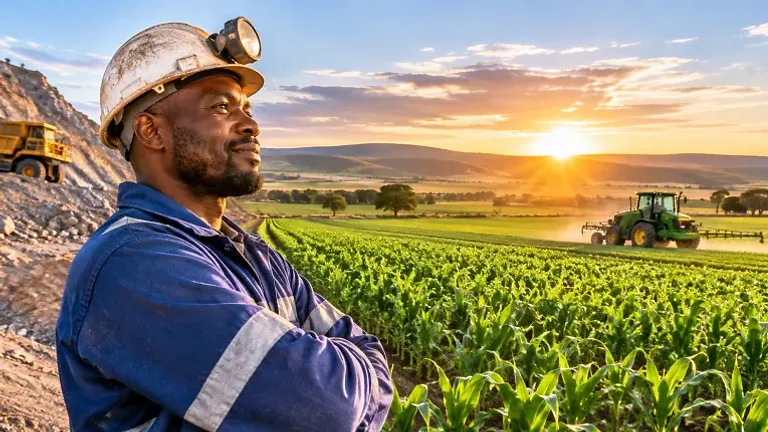
South African diamond miners turn to farming as global demand weakens
Falling diamond prices and rising production costs are prompting some small and medium-sized mining companies in South Africa to redirect their land and investment towards farming. According to the State Diamond Trader, declining demand and competition from laboratory-grown stones have forced several producers to suspend operations or enter liquidation. The number of compliant diamond producers fell by 27.3% to 32 in 2025/26. The shift towards agriculture comes as the government plans to release 2.5 million hectares of state-owned land to black farmers, providing title deeds and improved access to finance to support commercial farming and job creation.
Read full story: Business Insider Africa
Date published: November 24, 2026
Chinese agricultural machinery manufacturers target South African market
Chinese agricultural machinery manufacturers are looking to expand their presence in South Africa, targeting demand from both commercial farms and smaller-scale producers. At a business matchmaking event in Johannesburg, companies explored opportunities in equipment sales, technology transfer and after-sales support. Zoomlion, which already has 11 dealers and more than 10% of South Africa’s tractor market, plans to expand its Southern African dealer network by 2027. Manufacturers are also adapting machinery to local soil conditions and farming practices. South African industry representatives highlighted the potential for Chinese expertise to improve farm efficiency and strengthen domestic manufacturing.
Read full story: Belt and Road Portal
Date published: November 23, 2026
African News
Farmer training and market access key to sustained high-iron bean production in Uganda
Farmer training, reliable markets and seed payback schemes are important drivers of sustained high-iron bean cultivation among smallholders in Uganda, according to a recent study. Researchers found that 14% of farmers had discontinued production, despite extension support, while others cultivated the crop intermittently. Completing production training increased the likelihood of continued cultivation by 25%, while market participation and community seed payback schemes raised it by 15% and 25%, respectively. Key barriers included timely access to certified seed, land shortages, poor market access, pests and diseases, and adverse weather conditions.
Read full story: Bio Engineer
Date published: November 24, 2026
Global News
John Deere acquires AI company to advance precision farming in high-value crops
John Deere has acquired US-based agricultural technology company Orchard AI to expand its precision agriculture capabilities in high-value crops, including fruit orchards and vineyards. The company's AI-powered camera systems use computer vision to monitor fruit numbers, size, colour and crop development at individual plant level. The technology could help growers improve yield forecasting, target spraying more accurately and plan harvesting, labour and packing requirements. John Deere intends to integrate the system with its machinery and digital farming platforms, potentially creating opportunities for more efficient production across North and Latin American specialty crop industries.
Read full story: AgroLatam
Date published: November 24, 2026
Mexican coffee farmers protest Nestlé over low prices paid for Nescafé beans
Coffee producers in Mexico’s Chiapas region have protested against low prices paid by Nestlé for beans supplied to its Nescafé brand. Farmers say they receive just 43 pesos (US$2.20) per kilogram, compared with a retail price of 580 pesos (US$29), and are demanding at least 60 pesos per kilogram to cover production costs and provide a reasonable profit. The dispute reportedly affects 165,000 farming families across at least 20 municipalities. Producers are calling on the Chiapas government to intervene and facilitate negotiations with Nestlé.
Read full story: Mexico News Daily
Date published: November 24, 2026
Japan-developed flexible solar technology attracts international interest for combining farming and renewable energy
Japanese-developed flexible perovskite solar cells attracted international interest at COP31, with potential to generate electricity above farmland while allowing crops to grow below. The technology could help address energy shortages in rural areas, particularly in Africa and Asia, while providing farmers with additional income. Kenyan representatives expressed interest in using the systems to supply electricity, pump water and support rural development. Japan is also helping establish an Asia-Pacific platform to share agrivoltaic expertise across seven countries. However, tighter domestic regulations and financing difficulties remain obstacles to wider adoption.
Read full story: The Mainichi
Date published: November 25, 2026
EU-Indonesia trade agreement to boost European agricultural exports
The European Union and Indonesia have signed a Comprehensive Economic Partnership Agreement (CEPA) aimed at strengthening trade and investment ties. The deal is expected to benefit European farmers by removing tariffs on key agri-food exports, including dairy products, beef, poultry and processed foods, opening access to Indonesia’s market of 280 million consumers. EU agri-food exports to Indonesia were worth €960 million in 2025. The agreement will also protect 221 European geographical indications, while establishing commitments on environmental protection, workers’ rights and sustainable development. It also aims to secure EU access to Indonesia’s critical raw materials.
Read full story: Food & Agribusiness
Date published: November 24, 2026